REVIEW · SICILY
Excursion on the summit craters of Etna, with cable car and 4×4 bus
Book on Viator →Operated by Etna Together · Bookable on Viator
One volcano morning can change your whole Sicily view. This Etna summit excursion blends cable car speed with off-road access, so you spend less time wrestling with roads and more time seeing the active craters up close. Starting around Rifugio Sapienza at about 1,900 meters, you’re guided by authorized alpine and volcanological professionals for the climb to roughly 3,340 meters.
I like the way the route is built for altitude and time. You go up in stages: cable car to about 2,500 meters, then a special 4×4 minibuses jump to around 2,800 meters, then trekking begins on the most dramatic ground. You also get practical gear support like a helmet requirement from 2,900 meters and optional trekking poles on request.
One drawback to consider is weather. If wind or low visibility rolls in at the top, the summit experience can feel less rewarding, and one guest note flags that in those conditions the group didn’t get the views they hoped for.
In This Review
- Key highlights you’ll care about
- From Rifugio Sapienza to 2,500 m: the smart start
- 4×4 minibuses to 2,800 m: trading comfort for access
- The trek to ~3,340 m: lunar ground and active crater drama
- Stop focus: Valle del Bove and why it’s worth your attention
- The descent: sandy walking and crater history from 2002/2003
- Safety and gear: helmets, shoes, poles, and wind
- Price and value: what you’re paying for (and what you’re not)
- Weather, wind, and visibility: the make-or-break variable
- Who should book (and who should skip)
- Getting there: Nicolosi meeting point and optional pickup
- Should you book Etna Together’s summit craters tour?
- FAQ
- How long is the Etna summit craters excursion?
- What’s included in the ticket price?
- Is lunch included?
- Where does the tour start and end?
- What time does the tour start?
- How fit do you need to be?
- Is pickup available from where I’m staying?
- What happens if the weather is bad?
Key highlights you’ll care about
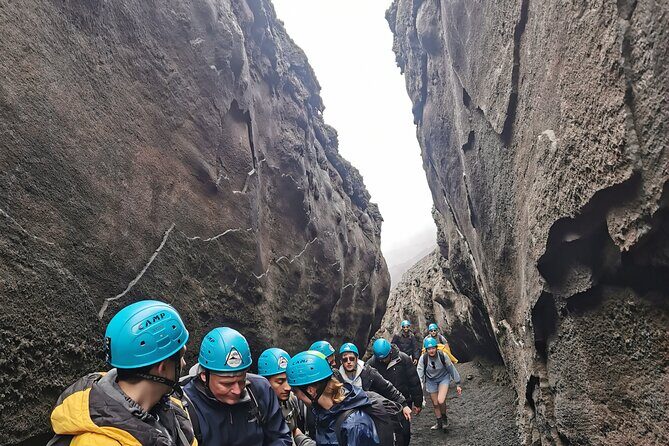
- Stages of ascent: cable car to ~2,500 m, then 4×4 to ~2,800 m, then trekking to ~3,340 m.
- Real active crater energy: fumaroles, explosions, and occasional puffs of ash and steam.
- Recent-lava walking: the route takes you across ground influenced by eruptions as recent as January 2024, plus older crater areas.
- Helmet at 2,900 m: safety gear isn’t optional once you hit the higher zone.
- Small group size: capped at 15 travelers, which helps on narrow or crowded volcano sections.
- Fun descent: sandy path downhill back toward the cable car, including crater areas from 2002/2003.
From Rifugio Sapienza to 2,500 m: the smart start
The day begins in the Rifugio Sapienza area near Nicolosi Nord, at about 1,900 meters. This matters because you’re not starting at sea level. You’re already in the higher terrain where Etna starts to look and feel different: colder air, sharper light, and a change from typical coastal Sicily scenery to raw volcanic ground.
You’ll ride the cable car up to around 2,500 meters with an alpine and volcanological guide team. That first ascent is all about reducing logistics friction. Instead of spending the morning stuck in a long drive and dealing with complex road conditions, you’re lifted quickly into the trekking zone. For many people, this is the difference between doing Etna and just hearing about it.
A practical tip: at these elevations, wind can switch on fast. Even if the lower areas feel mild, I’d assume you’ll need layers right away. The tour also recommends windbreakers, which is a clue that weather gear is part of the plan, not an afterthought.
You can also read our reviews of more tours and experiences in Sicily.
4×4 minibuses to 2,800 m: trading comfort for access
After the cable car, you switch to special off-road minibuses to reach up to about 2,800 meters. This isn’t just scenic driving. It’s a purposeful move: it shortens the time you spend walking in tough terrain before you even begin the main trek.
This stage is where the tour’s balance shows. You still get the adventure of rugged, volcanic access, but the day doesn’t turn into an all-day slog. With a total duration of about 5 hours 30 minutes, it’s clear the goal is to keep you moving while still allowing time at the craters.
The group stays small (maximum 15 travelers), which generally helps the transition steps feel manageable. In a bigger crowd, moving through steps like boarding, helmet distribution, and re-grouping can slow everything down. Here, the pace should be more controlled.
The trek to ~3,340 m: lunar ground and active crater drama
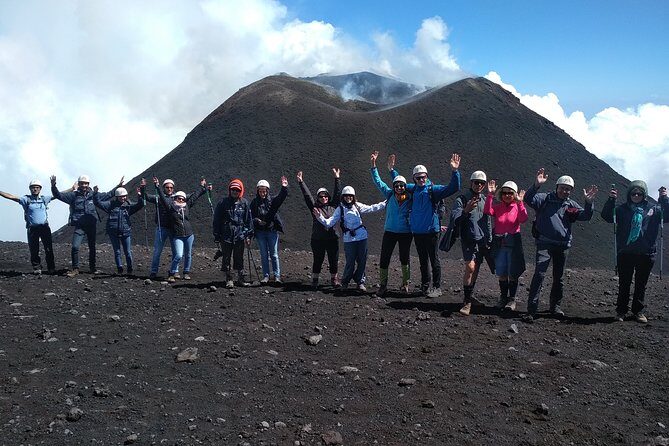
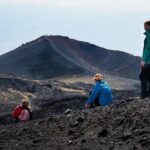
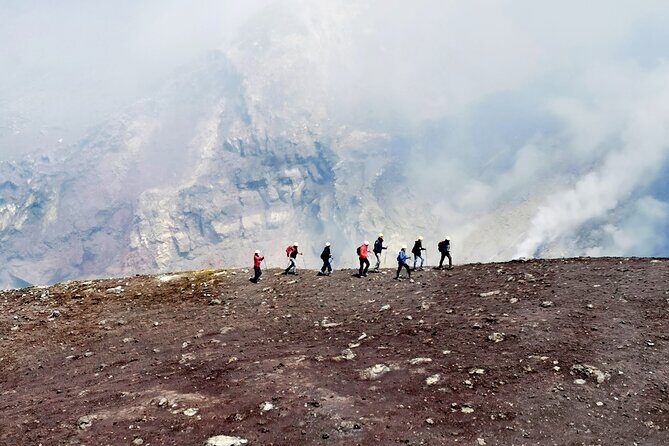
The main trek starts around 2,800 meters, after the minibuses drop you off. From there, you walk across very recent lava ground and through areas that can feel almost moonlike. You’re not just looking at Etna as a landmark. You’re walking through the aftermath—black rock textures, ash-scoured surfaces, and views that keep widening as you gain altitude.
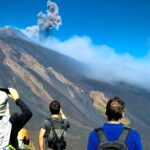
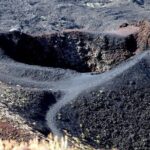
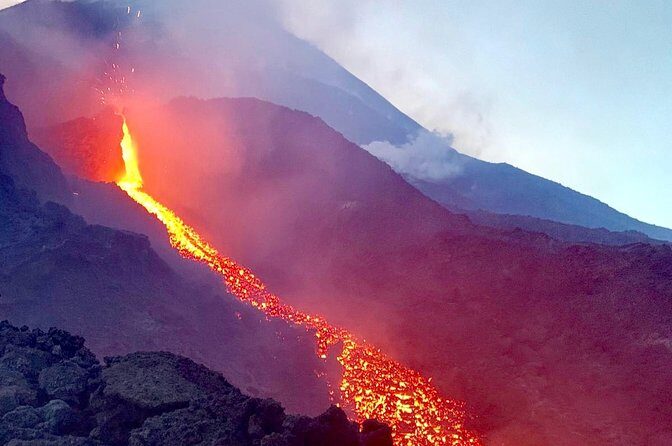
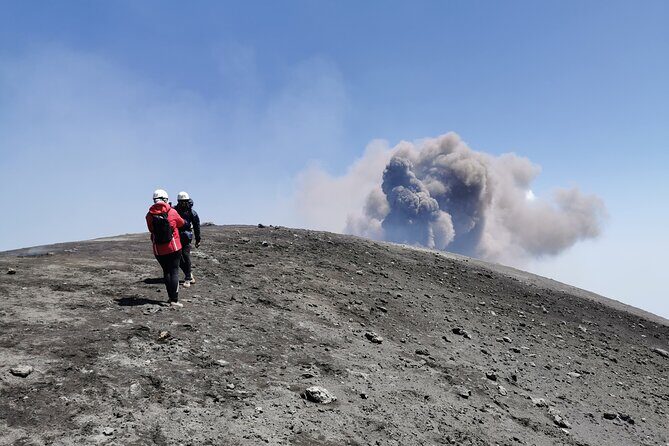
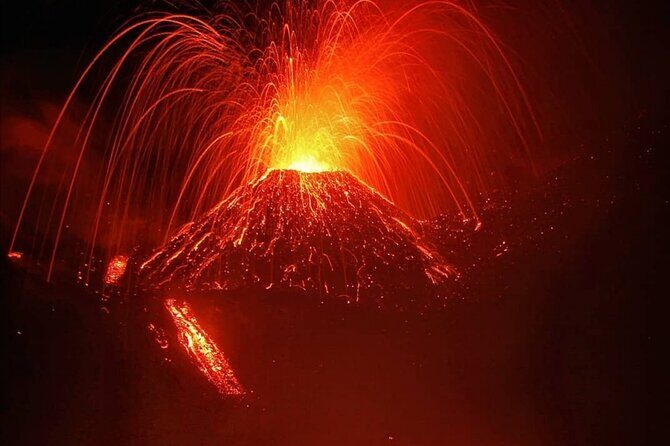
At the top zone near 3,340 meters, the spectacle is the active crater behavior. The guides aim you toward views of four active craters, where you can see and sense activity like fumaroles, continuous activity that can include explosions, and the surprising puffs of ash and steam.
A key mindset shift: this is not a calm nature hike. Even when you don’t see dramatic eruptions, the crater zone can be lively. Fumaroles mean gases escaping; steam puffs can happen quickly; ash can drift in bursts. You’ll be in an environment that changes minute to minute.
That’s why the guide team is emphasized as alpine and volcanological professionals authorized to accompany active volcanoes. It’s also why safety gear matters later in the day. If you like experiences that feel raw and real, this is where it clicks.
Stop focus: Valle del Bove and why it’s worth your attention
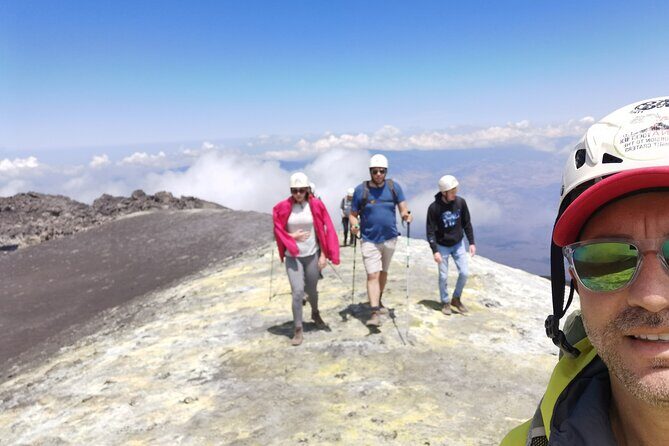
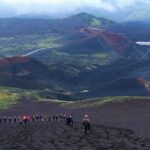
The day includes a stop in Valle del Bove. This is one of Etna’s most striking volcanic basins, and it tends to read like a natural amphitheater of broken terrain and steep volcanic walls.
Why it works on a day like this: Etna’s summit activity can dominate your thinking, but Valle del Bove helps you zoom out. You see the volcano as a system—how eruptions shape the structure, how valleys and ridges channel the land into dramatic angles, and how the summit doesn’t exist in isolation.
Practically, it also gives you a chance to pause and reset your legs. Even with the staged ascent, you’re still gaining altitude and walking on rough ground. A well-timed lookout stop can make the hike feel less like a single long push and more like a sequence of meaningful moments.
The descent: sandy walking and crater history from 2002/2003
After the summit viewing, you descend on a mainly sandy surface. This sounds mild, but on volcanic sand it can still be tricky. The good news is that the tour is designed for it: the descent is described as a fun way to return toward the valley rather than a slow, punishing grind.
As you go, you pass through crater areas connected to more recent eruptions, including the 2002/2003 events. This is one of the most interesting parts of Etna to experience in person. Summit zones get all the attention, but the crater fields and flow-affected areas below tell the continuing story of how the volcano evolves.
You also reach about 2,500 meters again, then return by cable car to the starting area. In other words, the day loops efficiently: climb via lift and vehicle access, trek for the core experience, descend back to the lift zone without needing a long return hike.
If you’re prone to sore knees, I’d take it seriously. Descent is where that pain often shows up—especially with sand underfoot. Good hiking shoes (the tour recommends them for a reason) make a real difference.

Safety and gear: helmets, shoes, poles, and wind
Etna at high altitude is not a place to show up underprepared. The tour handles some of this for you, but you still need the right base equipment.
Here’s what’s built into the tour:
- Trekking poles are available on request.
- A protective helmet becomes mandatory from 2,900 meters.
- Insurance is included.
- You’ll get guidance from alpine and volcanological specialists.
And here’s what the tour recommends:
- Hiking shoes with good traction (DA shoes are recommended).
- Windbreakers.
That helmet rule is a big signal. It tells you the environment isn’t just windy scenery. You’re in a zone where safety protocols matter, and you should treat the summit approach as a managed volcanic area rather than a free-form scramble.
One small note from a real-world experience: one guest described wet clothing after prior rain and mentioned guides were mostly Italian-speaking, reducing what they could learn. I can’t promise every day lines up with your expectations, but it does underscore this: bring proper water-resistant layers if rain is on the forecast and be ready for communication styles that may vary by day.
Price and value: what you’re paying for (and what you’re not)
The price listed is $168.58 per person for about 5 hours 30 minutes of guided, staged access to the summit crater zone. That sounds like a lot until you break down what’s included.
You get:
- Return cable car ticket
- 4×4 minibus ticket
- Alpine/volcanological guide
- Trekking poles on request
- Helmet (with the mandatory altitude threshold)
- Insurance
- Mobile ticket and English-offered tour support
What’s not included:
- Lunch, though you can buy something near the meeting point before you leave
So you’re mostly paying for two things: hard-to-organize logistics and qualified professional guidance. Getting from Nicolosi-area access points to around 3,300 meters with vehicle support and a controlled crater trek isn’t casual DIY territory. Even if you handle transport on your own, you’ll still need the right timing, proper approach, and a safety plan for active volcano conditions.
If you’re deciding between this and a more basic Etna outing, ask yourself what you want. If your priority is summit crater views and active fumaroles, this itinerary is the more direct route. If you only want a viewpoint and a gentle walk, you might feel the cost more than the value. But for people who want to experience Etna as a living volcano, the value equation changes fast.
Weather, wind, and visibility: the make-or-break variable
This excursion requires good weather. If it’s canceled because conditions are unsafe or not suitable, you’re offered another date or a full refund. That’s important because Etna isn’t predictable, and the top can swing from clear to brutal.
Even when the tour runs, wind is a key factor. One guest report flagged a day with terrible wind and almost no visibility at the summit, along with the feeling that the group should have started descending earlier. That tells you something: weather isn’t just a background detail. It affects how much of the crater spectacle you actually get to see.
My practical advice:
- Dress for wind first, warmth second.
- Assume you’ll be moving between sun and cloud.
- Don’t expect every summit day to look like a brochure photo.
If you’re going during a season when storms are common, build in flexibility. Free cancellation exists, so you can wait until closer to departure if your schedule allows it.
Who should book (and who should skip)
This tour is built for people with moderate physical fitness. You’re doing an uphill trek to about 3,340 meters and descending again over volcanic ground.
It also comes with a clear safety restriction: it is absolutely forbidden for anyone with cardiovascular problems. Altitude plus exertion is not the place to test limits.
So who fits well:
- You like guided walks and don’t mind rough terrain.
- You want to see active craters, not just admire Etna from far away.
- You want small-group pacing (maximum 15 travelers).
Who might reconsider:
- You hate high wind or you’re very sensitive to altitude and strenuous walking.
- You’re looking for a relaxed, minimal-effort outing.
- You don’t want to gear up for sudden weather changes.
Getting there: Nicolosi meeting point and optional pickup
The tour starts at a meeting point in Nicolosi: Monte Gebel Di Mariangela Carbonaro, Contrada Cantoniera, Nicolosi, CT 95030. Start time is 9:00 am, and the activity ends back at the meeting point.
Pickup is available but costs extra: 30 euros per person. It’s also noted to be near public transportation, which is helpful if you’re already staying around Nicolosi or nearby.
Because this begins early, plan to arrive ahead of time. Even if you’re local, check the day-of conditions. Etna days can affect timing and roads, and you don’t want to feel rushed at a high-altitude starting point.
Should you book Etna Together’s summit craters tour?
Book it if you want the core Etna experience: staged access, a guided trek to the crater zone around 3,340 meters, and the chance to witness active crater behavior like fumaroles, ash/steam puffs, and crater activity. With a 4.8 rating and 92% recommended, it’s clearly hitting the mark for many people.
Skip it or choose a different plan if:
- You know you won’t handle wind and low visibility well.
- You’re looking for a short, easy stroll.
- You have cardiovascular concerns (the tour states this is forbidden).
If you’re flexible and you dress for the summit conditions—especially wind—you’ll get a day that feels real and immediate. Etna isn’t gentle, and this tour doesn’t pretend it is. It gives you the right route to meet the volcano where it’s most alive.
FAQ
How long is the Etna summit craters excursion?
It runs for about 5 hours 30 minutes (approx.).
What’s included in the ticket price?
Inclusions include return cable car tickets, the 4×4 minibus ticket, an alpine/volcanological guide, trekking poles on request, a protective helmet required from 2,900 meters, insurance, and recommended equipment notes.
Is lunch included?
No. Lunch is not included, but you can buy something to eat at the meeting point before leaving.
Where does the tour start and end?
It starts at the meeting point in Nicolosi (Monte Gebel Di Mariangela Carbonaro, Contrada Cantoniera) and ends back at the same meeting point.
What time does the tour start?
The start time is 9:00 am.
How fit do you need to be?
You should have a moderate physical fitness level. You will be trekking and descending over volcanic terrain.
Is pickup available from where I’m staying?
Pickup from roundtrip accommodation is available as an extra service for an additional cost of 30 euros per person.
What happens if the weather is bad?
The experience requires good weather. If it’s canceled due to poor weather, you’ll be offered a different date or a full refund.