REVIEW · SICILY
Excursion HALF DAY- Syracuse Greek Theatre and the island of Ortigia.
Book on Viator →Operated by Ncc transfer excursions nel Val di Noto · Bookable on Viator
Syracuse feels like a story you can walk. This half-day route turns the senses on in Ortigia market, then slows down for big-time sights like the Ear of Dionysus at the Teatro Greco. I love how the pacing gives you both real local street life and major archaeology without turning the day into a marathon. One thing to plan for: the entrance to the archaeological area at the Greek Theatre costs extra.
This is built for comfort and easy logistics. You get an air-conditioned vehicle and a small group (up to 15 people), with a guided flow from market to island highlights to the theatre area. In the reviews, guides like Mr. BIAGIO get praised for being prepared and clearly in love with Syracuse, which matters because Ortigia can feel like a maze unless someone helps you read it.
The time window is tight, so you will walk and you will choose. Each main stop is about an hour, and the Greek Theatre visit depends on having the paid site entry plus decent conditions above ground (this experience requires good weather).
In This Review
- Key Highlights You’ll Care About
- From Avola to Ortigia: The Half-Day Shape
- Mercato di Ortigia: Food, Smell, Color, and Song
- Isola di Ortigia: Apollo, the Cathedral, and Fonte Aretusa
- Teatro Greco: Ear of Dionysus and the Paid Archaeological Entrance
- Price and Logistics: Does It Feel Like Value?
- Who This Tour Suits Best (And Who Should Think Twice)
- Should You Book This Half-Day Syracuse Tour?
- FAQ
- How long is the Syracuse Greek Theatre and Ortigia excursion?
- What is included in the tour price?
- Is the entrance to the Greek Theatre included?
- Where does the tour meet, and where does it end?
- How big is the group?
- Do I get a mobile ticket?
Key Highlights You’ll Care About

- Ortigia market with character: a guided look at local scents, flavors, customs, and sellers who sing lullabies in the local language
- Ancient sights in a compact walk: Temple of Apollo, the Cathedral, and Fonte Aretusa on Isola di Ortigia
- Teatro Greco must-sees: Ara of Hieron, Ear of Dionysus, Roman amphitheater, and the cave of Cordari
- Comfortable ride: included air-conditioned transportation
- Small group size: a maximum of 15 travelers keeps the tour from feeling rushed
- Greek Theatre ticket is extra: entrance to the archaeological area is not included, so budget ahead
From Avola to Ortigia: The Half-Day Shape
You start early at 8:00 am, meeting at Birrico Tour Ag Viaggi – Ncc luxury Transfer – Escursioni – Msc Crociere on Corso Vittorio Emanuele, 147 in Avola. The tour ends back at the same meeting point, which is a big deal if you hate the last-stretch scramble or you’re trying to stay sane on a short vacation.
The duration is about 6 hours, and that timing tells you what this is: a focused sampler. You’re not trying to cover all of Syracuse in one day. Instead, you’re hitting two core areas—Ortigia and the Greek Theatre—with just enough time at each place to get oriented and enjoy the main highlights.
Transport is included and air-conditioned, which helps a lot in Sicily when the day warms up. Also, you’ll likely get a smoother experience with a smaller group of up to 15. That matters in Ortigia, where narrow streets can slow big crowds down fast.
Finally, you’ll use a mobile ticket. That’s the easy part, but it also means you’ll want your phone charged and your confirmation ready so you don’t waste time at the start.
You can also read our reviews of more tours and experiences in Sicily.


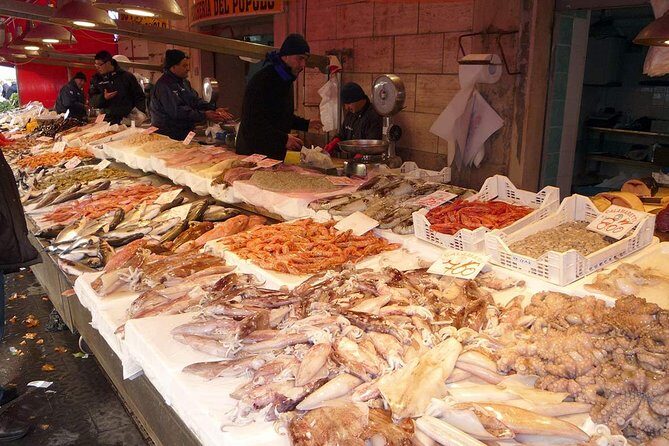
Mercato di Ortigia: Food, Smell, Color, and Song
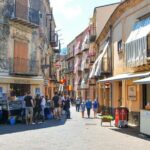
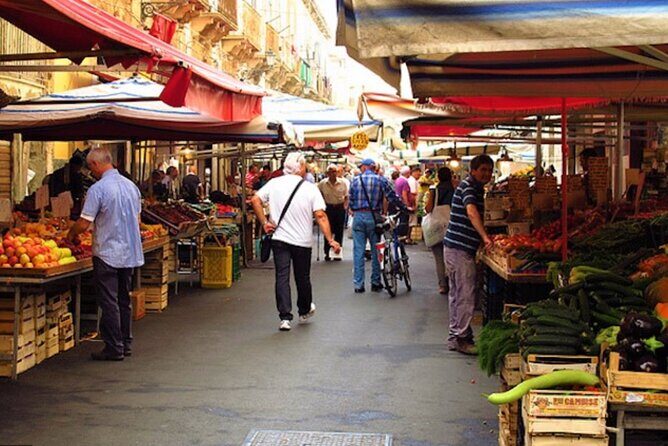
Mercato di Ortigia is not just about what you eat—it’s about how the market works as a living neighborhood. You’ll get a guided tour of the typical market with scents, flavors, customs, and colors, and there’s a special twist: sellers describe their products while singing lullabies in the local language.
Why I like this stop for your trip: it sets the tone for Syracuse. Before you see temples and theatre seats, you get the everyday Sicily. That makes the whole day feel connected, not like you’re bouncing between unrelated tourist stops.
You also get about an hour here, and that is the right length for a market. It’s long enough to watch how vendors talk, browse the space, and get a feel for what’s local, but not so long that you end up doing the same aisles twice. And the best part for planning: the market stop includes admission ticket access for free.
Practical tip: wear shoes you can walk in for a full day, even if this is called a half-day. Markets mean uneven flooring and constant turning. If you’re the kind of traveler who wants photos, this is a great place to start because the colors and textures give you instant picture material.
Isola di Ortigia: Apollo, the Cathedral, and Fonte Aretusa
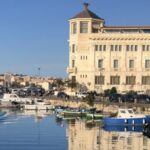
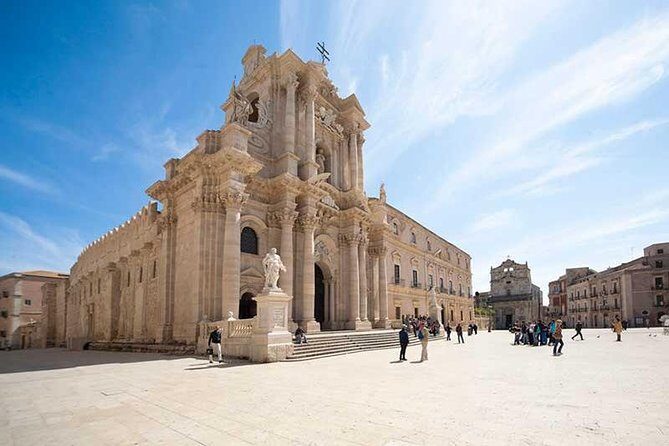
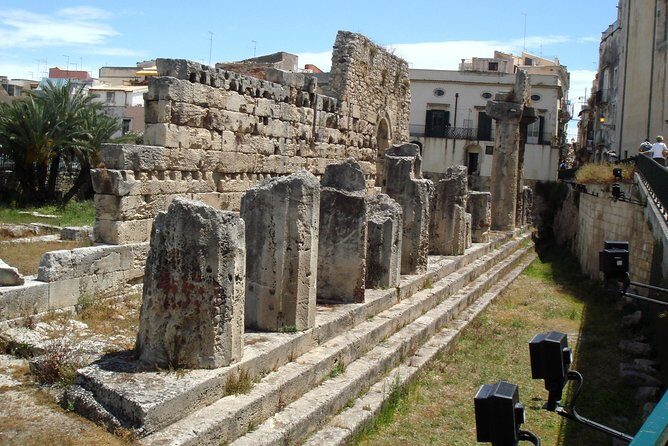
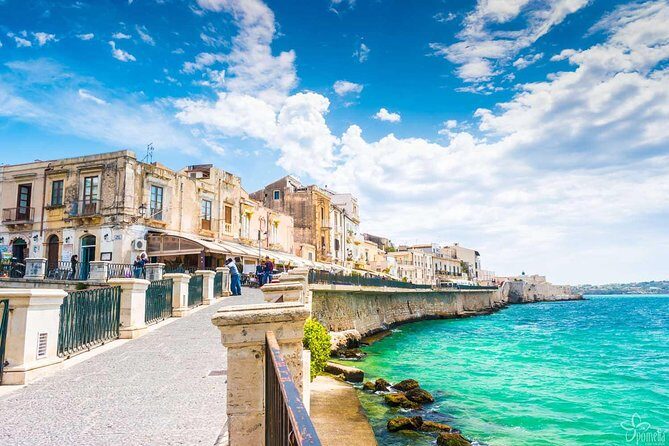
After the market, the tour keeps you in the heart of the ancient city: Isola di Ortigia. This is where you start seeing why Syracuse matters historically and visually. You’ll move through alleys and streets where you can admire a few major landmarks in a guided flow: the Temple of Apollo, the Cathedral, and Fonte Aretusa.
What makes this stop valuable is the mix. The Temple of Apollo gives you a direct link to the ancient Greek layer. The Cathedral brings in the later religious architecture that grew on top of earlier civilizations. Fonte Aretusa adds a more human, everyday kind of interest—something you can relate to even if you’re not a hardcore archaeology person.
You get about an hour for this walk, so you’re not stuck in long lines or trapped in one single site. Instead, you’re connecting dots. That pacing is ideal if you like seeing places in context rather than only standing in front of one monument.
One consideration: Isola di Ortigia’s streets are narrow. You’ll want to keep your pace steady, especially if you’re traveling with someone who gets tired easily. Bring sun protection and water, because even when the tour is guided and you’re only scheduled for an hour, you’re still outside.
If you care about storytelling, this is another spot where a good guide really helps. When a guide is clearly passionate—like Mr. BIAGIO, who’s noted for being prepared and in love with Syracuse—you get explanations that make the buildings easier to remember later.
Teatro Greco: Ear of Dionysus and the Paid Archaeological Entrance
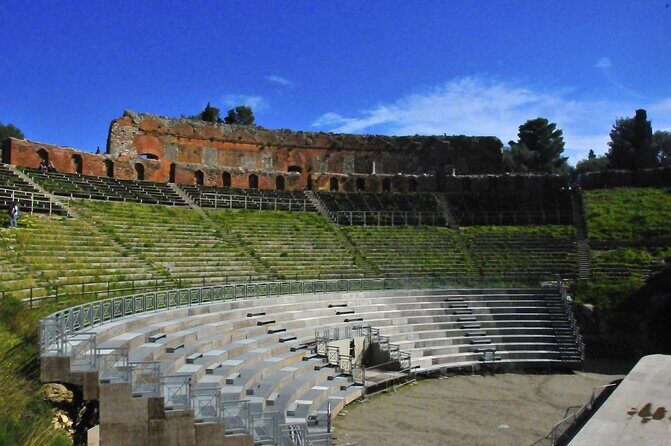
Then comes the big finale: Teatro Greco, with its key points like the Ara of Hieron, the Ear of Dionysus, the Roman Amphitheater, and the cave of Cordari. You’ll see the Greek Theatre complex and its standout features that most people come to Syracuse for.
Here’s the main drawback to plan around: admission to the archaeological area is not included. So the tour price covers the guided experience and logistics, but you need to pay the site entrance separately on the day (or in the moments before entering, depending on how the staff handles it). Budget for that extra cost and don’t treat it as a surprise fee. It’s simply part of how these sites work.
Why the Teatro Greco stop is worth it: the Ear of Dionysus is the kind of place you can’t easily fake with a photo. The geometry and the way the space is designed make it feel special even if you don’t know every term about ancient sound or theatre engineering. The Ara of Hieron and the Roman amphitheater add contrast, showing how the site changed across eras rather than staying frozen in one time period.
You’ll get about an hour allocated to this stop, and again, that’s the sweet spot for a high-impact visit. You won’t see every corner in deep detail, but you will get the main structures and the key story beats so the place feels intelligible, not just enormous.
Weather matters here. The experience requires good weather, and that makes sense when you’re walking around archaeological areas outdoors. If conditions are poor, you can lose time, and you also want stable footing.
Price and Logistics: Does It Feel Like Value?
The price is $77.44 per person, and the big included item is the air-conditioned vehicle. That matters because this tour is basically a timed “in-and-out” format with multiple walking sections. When you’re paying for transport plus guidance, the structure becomes the value, not just the individual sights.
On top of that, you get a mobile ticket and a small group size (maximum 15). For many travelers, that combination feels smoother than larger group tours, especially on foot around Ortigia.
The trade-off is the archaeological entrance at the Greek Theatre. Since it’s not included, your total day cost depends on that paid access. Still, this doesn’t make the tour bad value—it just means the pricing is transparent about what you pay for guidance and transport versus what the site charges for entry.
Also pay attention to the scheduling rhythm. This is a tour booked on average about 78 days in advance, which hints it can be popular. If you’re traveling in peak season, booking earlier usually helps you lock in your spot without last-minute stress.
If you’re trying to maximize your time, this half-day format is a smart way to get both Ortigia and the theatre complex without needing a full day devoted only to archaeology.



Who This Tour Suits Best (And Who Should Think Twice)
This tour fits you if you want a guided taste of Syracuse in a short window. It’s especially good if you like the order of the experience: market first (to get grounded in local life), then Ortigia’s landmarks (to connect the ancient and religious layers), then the big ancient theatre site (to close with a wow).
You’ll also appreciate it if you don’t want to manage transport yourself. The included air-conditioned vehicle from the Avola meeting point removes one of the most annoying vacation tasks.
It’s less ideal if you want unlimited time at the Greek Theatre or you’re the type who needs long breaks at every stop. Because each main area gets about an hour, you’re working with a schedule. And since the archaeological entrance is paid separately, you’ll want to be organized about that extra step.
Family practicality: the tour notes that most travelers can participate, and the group stays small. That helps. Still, plan for walking on outdoor streets and archaeological terrain, and you’ll enjoy it more if you can handle a fair amount of on-foot movement in a day.
Should You Book This Half-Day Syracuse Tour?

Yes, I’d book it if you want a well-paced introduction to Syracuse that balances local life and major monuments. The standout advantage is the combination of Ortigia market character and the big archaeological payoff at Teatro Greco, all supported by guided context and comfortable transport.
Skip or rethink it only if you’re not interested in walking between stops, or if you’re hoping the price fully covers everything at the Greek Theatre—because the archaeological entrance is extra. Also, if the weather is looking rough, remember this experience requires good weather.
If you match the vibe—short on time, ready to walk, and happy to pay for the site entry—you’ll likely feel like you got your money’s worth quickly, without turning Syracuse into a checklist you rush through.
FAQ
How long is the Syracuse Greek Theatre and Ortigia excursion?
It runs for about 6 hours (approx.), starting at 8:00 am and returning to the meeting point.
What is included in the tour price?
The tour includes an air-conditioned vehicle and guided visits at the listed stops. The market and Ortigia walk segments don’t require paid admission.
Is the entrance to the Greek Theatre included?
No. Entrance to the archaeological area at Teatro Greco is not included and must be paid separately.
Where does the tour meet, and where does it end?
It meets at Birrico Tour Ag Viaggi – Ncc luxury Transfer – Escursioni – Msc Crociere, Corso Vittorio Emanuele, 147, 96012 Avola SR, Italy. It ends back at the same meeting point.
How big is the group?
The tour has a maximum of 15 travelers.
Do I get a mobile ticket?
Yes. The tour provides a mobile ticket.