REVIEW · SICILY
Etna North excursions departing from Piano Provenzana
Book on Viator →Operated by Guidetna.it - Volcanological Guides on the Etna · Bookable on Viator
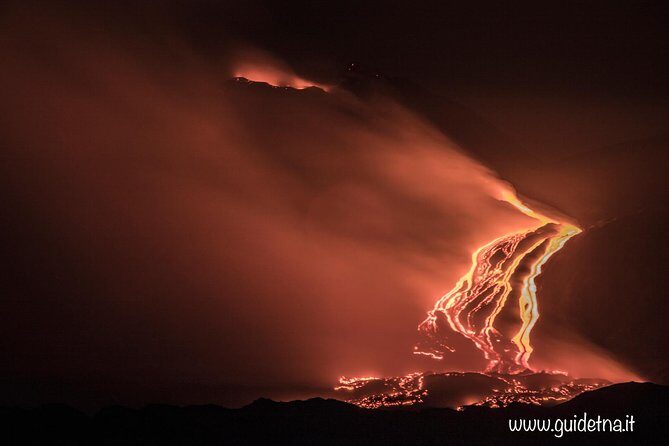
Volcano scars from 2002 are still visible. The Etna North outing to the Bottoniera del 2002 is all about seeing how a modern eruption reshaped the northern side of the volcano—and understanding it with a volcanological guide. Bottoniera del 2002 is the star, and you’ll also get clear explanations from guide Gianluca and others on the group.
I especially like that it’s a small group (up to 15) and that the emphasis is on what you’re standing on: craters, canyons, hornitos, and the eruptive fracture itself. One thing to keep in mind: Etna weather can change fast, and parts of the visit may require extra costs for getting up higher (like cable car or jeep), which are not included.
In This Review
- Key things to know before you go
- Bottoniera del 2002: the Etna North hike with real scars
- Where you start in Piano Provenzana (and how the group stays manageable)
- Mount Etna stop: eruptive fracture, craters, canyons, hornitos
- The walk itself: distance, pace, and what wind does to your plans
- What you get for the $54.01 price tag
- Timing, light, and why the north side can feel calmer
- Weather rules on Etna and how cancellations are handled
- Who this tour suits best (and who should rethink it)
- Should you book this Etna North excursion or pick something else?
- FAQ
- Where does the Etna North excursion depart from?
- How long is the tour?
- Is the tour offered in English?
- What’s included, and what might cost extra?
- What should I wear or bring for the hike?
- Can I cancel for free if plans change or weather is bad?
Key things to know before you go
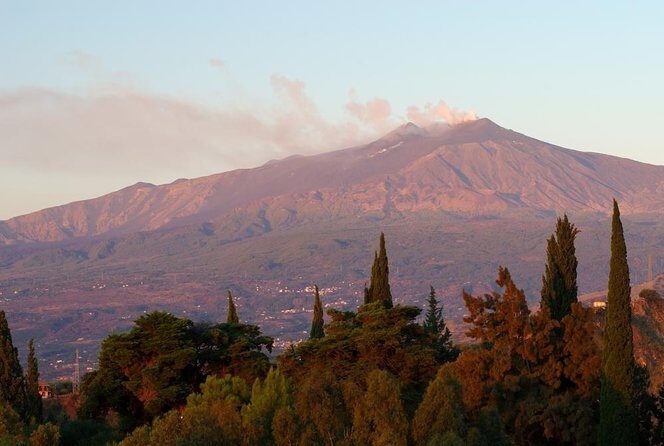
- Bottoniera del 2002 focus: you’ll walk through the 2002 eruptive fracture area tied to the destruction of Piano Provenzana facilities
- Volcanological guidance: you get an expert guide along the route, not just a basic walk
- North-side vibe: the north side can feel less crowded than the more famous Etna viewpoints
- Dress for wind: strong breeze can make higher spots feel cold fast
- Small group size: maximum 15 people helps keep the pace calm and questions easy
- Price includes admission: the Mount Etna admission ticket for the stop is free, but cable car/jeep costs extra
Bottoniera del 2002: the Etna North hike with real scars
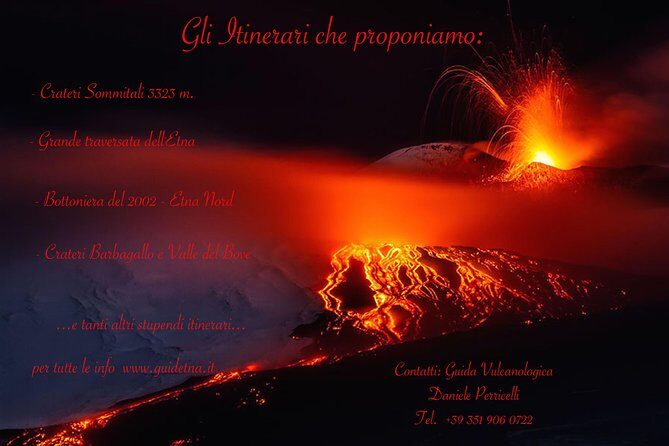
This excursion is built around one specific place: the eruptive fracture known as the Bottoniera del 2002. In 2002, this eruption created a major fracture and directly affected the area of Piano Provenzana in northern Etna (near Linguaglossa). So instead of just looking at Etna from far away, you’re walking through the kind of terrain that makes the volcano feel immediate.
What makes it rewarding is the way the route connects visuals to explanations. You’re likely to see features like craters, canyons, and hornitos as you move through the area, but the guide isn’t there to recite facts in a vacuum. The best part is how the explanation fits what you’re seeing right then—rock formation, eruption processes, and how the landscape changed.
If you love Etna but want a more thoughtful experience than a quick photo stop, this is a strong choice. You’re also in good hands with guides like Gianluca, who comes through in the stories as professional, engaging, and great at answering questions for everyone, including kids.
You can also read our reviews of more tours and experiences in Sicily.
Where you start in Piano Provenzana (and how the group stays manageable)
You meet at Via Provenzana, 35, 95015 Linguaglossa CT, Italy. The activity ends back at the same meeting point, so you’re not dealing with confusing drop-offs or transfers at the end of a long day.
The group size is capped at 15, which matters more than it sounds. On Etna, the best moments often happen when you can pause, look closely, and ask what you’re noticing. A smaller group makes that easier, and it usually keeps the hiking pace more human.
You’ll also get a mobile ticket, and confirmation is typically sent within 48 hours of booking, based on availability. Language is listed as English, so you can go into it without guessing how much you’ll understand. This is the kind of tour where your day works better if you’re ready to listen and walk at the same time.
Mount Etna stop: eruptive fracture, craters, canyons, hornitos
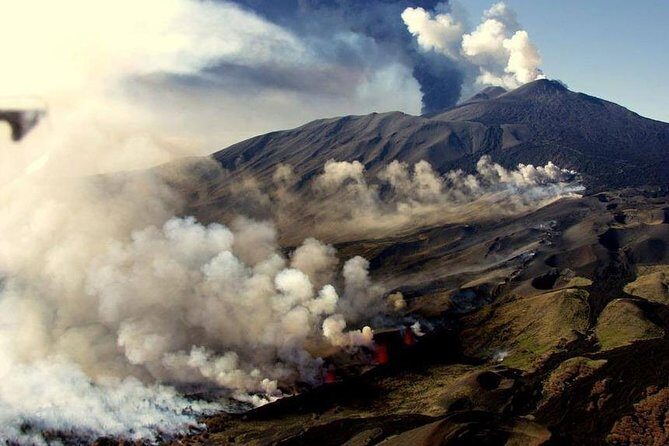
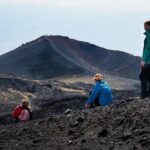
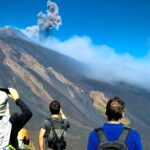
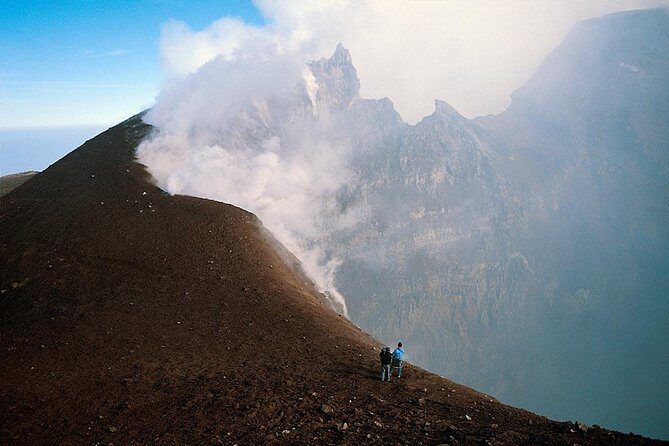
The heart of the outing is the Mount Etna stop centered on the Bottoniera del 2002. The route takes you through a dramatic volcanic setting tied to the 2002 eruption—one of the major eruptions of the last decades. And because the eruption literally changed what was there, the experience has weight: you’re not just on a nature trail, you’re in a place shaped by destruction and rebuilding.
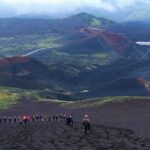
During the trek, the guide helps you notice the “how” behind what you can see. You’ll likely hear about the eruptive fracture itself and how the features formed. The walk is described as characterized by craters, canyons, and hornitos, which are the kind of volcanic formations that look otherworldly but become understandable when explained in plain terms.
Some tours and routes also connect the 2002 area with what you can observe from other eruption-generated features. For example, one account highlights a path along the northeast side to admire craters connected to the eruption of 1865. Even if your exact route details vary day to day, the theme stays consistent: you’re learning to read Etna like a map.
Admission for this Mount Etna stop is listed as free, which is a nice value add. Just remember that getting to the higher points (when needed) can involve cable car or jeep costs that aren’t included.
The walk itself: distance, pace, and what wind does to your plans
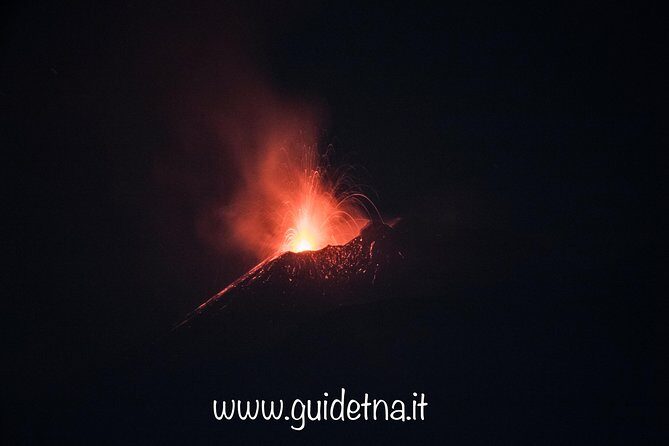
The duration is listed as 2 to 5 hours overall, and the Mount Etna stop is about 3 hours. On the ground, that typically means a real hiking block, not a stroll, but not an all-day endurance event either.
One reason this tour gets such good marks is how the pace works in practice. A few accounts mention an approximately 4 km route on a slope with medium-low difficulty, plus intermediate stops for breaks and explanations. That rhythm helps, especially on volcanic terrain where you may want time to look at rock textures and small formations.
Terrain can also be slightly tricky in spots, so trekking shoes are the smart call. Etna is a “serious” mountain in the sense that you’ll want grip and support. Strong wind is another factor. Even on clear days, higher areas can feel cold because the breeze finds you fast.
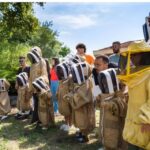
The good news: there’s often practical help for this. One account notes that staff provide hiking shoes, windproof jackets, and walking poles at the start of the route. Another account mentions the value of having a hooded windproof layer. Either way, plan to be outdoors in wind, not in a gentle countryside breeze.
And yes, kids can handle it—when the pace is respected and the guide keeps everyone involved. If you’re traveling with younger hikers, this kind of guided, interactive approach makes a big difference.
What you get for the $54.01 price tag
At $54.01 per person, the value hinges on what’s included: you get accompaniment with a volcanological guide, plus free admission ticket for the Mount Etna stop. For an activity centered on a specific volcanic fracture site, that’s a solid deal.
The items not included are also clear: cable car or jeep costs. In real terms, that means your final total depends on how you and the guide handle getting to the best starting elevation for the day’s conditions. If you’re trying to budget tightly, assume you may pay something extra if those options are needed.
One more value point: the English-language guidance. A guide who can explain formation processes, eruption history, and what you’re seeing on the ground is what turns Etna from scenery into understanding. People consistently highlight guides like Gianluca and Flavio as prepared, competent, and energetic, with explanations that connect directly to the terrain.
Also, the small group size helps you feel like you’re not just one face in a line. That makes the $54.01 go further, because you spend more time asking questions and less time waiting.


Timing, light, and why the north side can feel calmer
The tour runs out of Piano Provenzana on Etna’s north side (near Linguaglossa). One practical advantage is that the north side can feel less touristy than the more commonly photographed Etna areas. If you’re the type who likes to hear your own thoughts between viewpoint stops, that quiet can be a feature, not a coincidence.
Light can be another perk depending on season and schedule. One account highlights a nice effect during late afternoon/early evening in June: low sun gives striking images, and the timing can make the route feel extra cinematic. If you’re flexible on dates, timing may help you get better light without turning the day into a rushed photo sprint.
Keep your expectations grounded, though. Even on a clear day, altitude brings wind and temperature shifts. The best photos often come right when you’re also thinking, why is it so cold, and how fast can we get moving again. Pack accordingly.
Weather rules on Etna and how cancellations are handled
Etna has a reputation for changing conditions quickly, and this tour operates with safety-first decisions. The requirement for good weather is stated clearly, which means if conditions aren’t safe, the excursion won’t run.
If the experience is canceled due to poor weather, you’ll be offered a different date or a full refund. That’s the right kind of flexibility on a volcano day, because the mountain doesn’t care about your calendar.
For you, the best strategy is simple: be ready to adapt. If you’re planning around a tight travel schedule, try not to stack all your Etna time on one single fixed hour. Give yourself a little breathing room so a weather decision doesn’t wreck the rest of your trip.
Who this tour suits best (and who should rethink it)
This excursion fits you if you want an Etna experience that feels educational without being boring. A volcanological guide makes the difference when you’re trying to understand why the Bottoniera del 2002 area looks the way it does.
It also suits families because the guide style can work well with children, with interaction and explanations that keep younger hikers engaged. If you want a first-time Etna option that isn’t just a viewpoint, this provides a real walking experience with pauses to learn.
Rethink it if you hate wind or if your mobility is limited. The route is described as easy to medium-low for most people, but it still involves walking on a slope, and trekking shoes matter. Also, because the tour depends on safe weather, it can be less ideal if you need guaranteed outdoor time at a specific moment.
Should you book this Etna North excursion or pick something else?
Book this tour if you want the most “Etna at ground level” feeling for your money. The focus on the Bottoniera del 2002 eruptive fracture gives you a story you can walk through, and the guide-driven explanations make it more than a trek for photos.
You should also book if you like small-group experiences with room to ask questions and pause. The maximum 15-person size, the free admission ticket for the stop, and the guide accompaniment all strengthen the value.
Skip or switch plans if you can’t handle cold wind, or if your dates are locked without flexibility. Etna’s weather can force a change, and this tour is honest about needing good conditions.
If you’re traveling through Sicily and you’re within striking distance of Piano Provenzana, this is a very practical way to see a real eruption scar—and learn what you’re looking at while you’re there.
FAQ
Where does the Etna North excursion depart from?
You meet at Via Provenzana, 35, 95015 Linguaglossa CT, Italy. The activity ends back at the same meeting point.
How long is the tour?
The experience lasts about 2 to 5 hours. The Mount Etna stop is listed at about 3 hours.
Is the tour offered in English?
Yes, the tour is offered in English.
What’s included, and what might cost extra?
Included is accompaniment with a volcanological guide. Not included are costs for the cable car or Jeep, if needed.
What should I wear or bring for the hike?
Trekking shoes are recommended. Some parts of the route may involve wind and cold at higher spots, and windproof gear is a good idea. In at least one account, the staff provided hiking shoes, windproof jacket, and walking poles at the start.
Can I cancel for free if plans change or weather is bad?
You can cancel up to 24 hours in advance for a full refund. If the experience is canceled due to poor weather, you’ll be offered a different date or a full refund.