REVIEW · PALERMO
Discover the Charm of Palermo: A 3-Hour UNESCO Sites Walking Tour
Book on Viator →Operated by Towns of Italy · Bookable on Viator
Palermo stacks centuries in one walk. This 3-hour UNESCO sites tour strings together Norman-Arabic splendor, baroque streets, and real neighborhood life in a tight loop. You’ll move from showpiece squares to working markets, then end with time at Cattedrale di Palermo.
I love how efficient the route is: you get the big visual hits like Quattro Canti and Piazza Pretoria without losing the thread. I also like that the guide doesn’t just point things out, with stories credited to guides such as Valeria, Peter, Fabio, Renata, Simone, and Debbie, plus an audio setup so you can follow in the crowd. And you get a practical food payoff at the end with a cannolo or granita.
One consideration: the tour is built to see a lot in about 3 hours. If you want long, slow time inside the Palatine Chapel mosaics, you’ll likely need extra arrangements since the tour focuses on explanations and cathedral entry time, not full palace-side exploring. Also, like the city itself, restrooms can be tricky to find on your own.
In This Review
- Key Highlights That Make This Tour Worth It
- A Short Tour Route That Explains Palermo’s Big Cultural Mix
- Price and Value: What $31.88 Covers (and What It Doesn’t)
- Meeting Point at Via Volturno and How the 3-Hour Loop Feels
- Teatro Massimo, Galleria delle Vittorie, and the Via Maqueda Energy
- San Domenico, Piazza Caracciolo Markets, and Mafia-Symbol Church Stories
- Palermo Stock Exchange, Descent of the Judges, and La Martorana (Santa Maria dell’Ammiraglio)
- Piazza Pretoria and Quattro Canti: Baroque Geometry You Can’t Miss
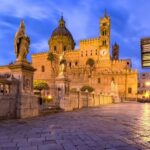
- Cattedrale di Palermo: Norman Architecture Inside (Where the Styles Overlap)
- Villa Bonanno Garden and the Palazzo dei Normanni Area
- Cannolo or Granita Stop: The Food Moment That Helps You Enjoy Later
- Who Should Book This Palermo UNESCO Walking Tour
- Should You Book? My Practical Recommendation
- FAQ
- How long is the Palermo UNESCO walking tour?
- What is the price per person?
- Is the tour in English?
- What attractions include admission tickets?
- Where does the tour start and end?
- Is the tour refundable if plans change?
Key Highlights That Make This Tour Worth It
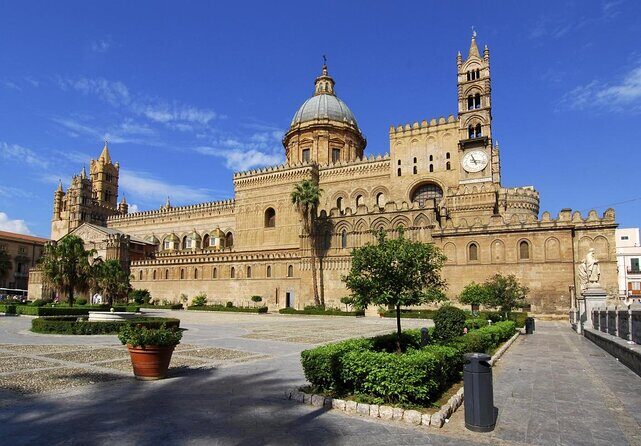
- Cattedrale di Palermo entry is included so you’re not stuck outside for the main stop.
- You learn the Norman-Arabic story on the route, not just at one monument.
- Markets and fountains break up the marble-and-stone scenes, keeping it feeling like Palermo.
- Small group size (max 20) makes questions easier and the pace more manageable.
- Local flavor at the end: cannolo or granita included.
- Audio support (headsets/amplification) helps you hear the guide even near traffic and crowds.
A Short Tour Route That Explains Palermo’s Big Cultural Mix
Palermo’s charm is that it doesn’t belong to one empire or one style. In a few blocks you can feel the shift—from Norman building choices to Arabic details, then to later baroque boldness. This tour works because it uses those contrasts as a lesson plan.
You start with grand public architecture and end at the cathedral, while the middle sections give you the missing ingredient: street life. You’re crossing lively market streets, stopping at major squares, and seeing how the city’s layout shapes what you notice. Even if you only have one half-day, you’ll come away with a mental map you can use right away.
You can also read our reviews of more walking tours in Palermo
Price and Value: What $31.88 Covers (and What It Doesn’t)
For $31.88 per person, you’re paying for three things that matter on a short walk: a licensed English-speaking guide, guided time at Cattedrale di Palermo, and a small included food treat.
Included highlights worth noting:
- A guided walk with a licensed English-speaking guide
- Entrance to the Cathedral
- A typical Sicilian cannolo or granita
- Mobile ticket access
- Admission for several exterior stops is free, so you’re not constantly buying add-ons
Not included (and this is important):
- Hotel pickup/drop-off
- Most monument tickets beyond the cathedral (for example, the Palazzo dei Normanni area is treated as an exterior viewing and explanation stop)
If you’re comparing to other walking tours that are mostly look-but-don’t-go, this one earns its value by actually getting you inside the cathedral.
Meeting Point at Via Volturno and How the 3-Hour Loop Feels
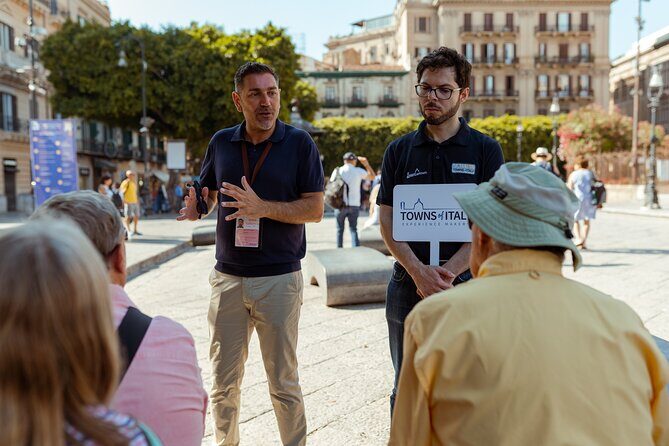
The tour starts at Via Volturno, 44, 90138 Palermo and ends back at the same point. That round-trip matters because it makes it easier to plan the rest of your day—especially if you’re pairing this with a later neighborhood meal.
A few practical notes from the tour details:
- Duration is about 3 hours
- Group size is up to 20
- The tour runs regardless of weather
- Service animals are allowed, but pets aren’t
- It’s near public transportation
- You’ll use a mobile ticket
One real-world comfort tip: Palermo streets can be loud, and some areas you expect to be fully pedestrian can still feel traffic-adjacent. The audio/headset setup helps a lot, and it also means you don’t have to keep looking over at the guide just to catch the story.
Teatro Massimo, Galleria delle Vittorie, and the Via Maqueda Energy
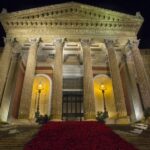
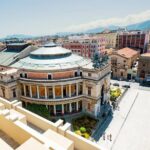
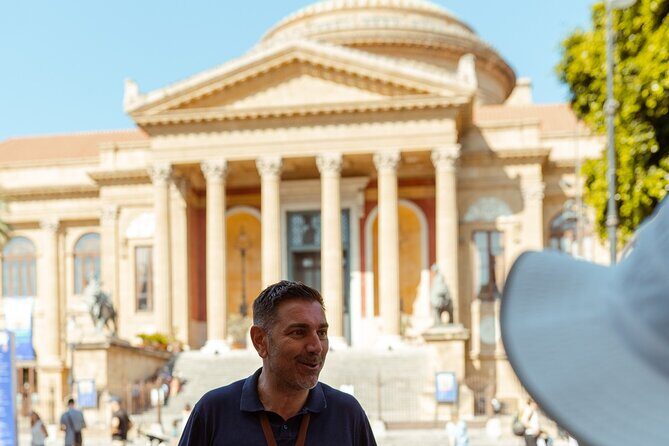
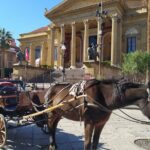
You begin in the area of Teatro Massimo Vittorio Emanuele on Piazza Verdi. This opera house is huge—one of the largest in Europe when it opened, and celebrated for its acoustics. Even if you’re not an opera person, it’s a great starting image: Palermo can be grand and formal.
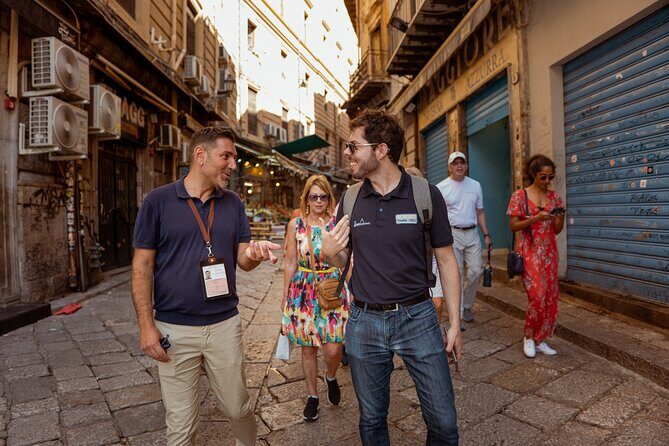
From there, you move to the Galleria delle Vittorie, a five-story commercial gallery along Via Maqueda. Over the decades it has deteriorated, but it still signals what this part of town once was and how Palermo has layered modern life over older bones.
Then you head toward the street-market feel:
- Crossing Via Bandiera, where you find an open-air market
- Moving through the center area that mixes shops, pedestrians, and the everyday rush of the city
This opening stretch is useful. It’s not just architecture; it sets expectations for how Palermo works—busy streets, quick shifts in scenery, and small places that feel made for wandering.
San Domenico, Piazza Caracciolo Markets, and Mafia-Symbol Church Stories
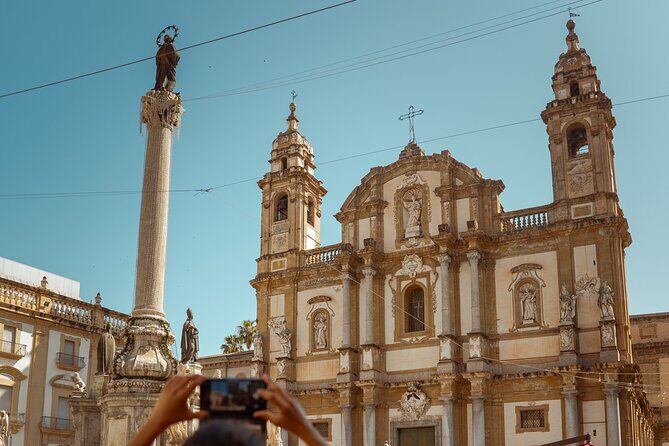
Next you reach Chiesa di San Domenico in its square, near the top of the city’s church hierarchy. It’s free to visit from the outside, and it’s special for two reasons:
- It’s described as a Pantheon of illustrious men of Sicily
- It’s also considered a symbol in the fight against the mafia
That second point is one of those details that makes a building feel present-day, not just historic. You’re not only learning what was built—you’re learning what it represents in Palermo’s ongoing life.
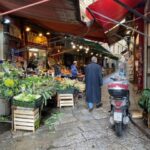
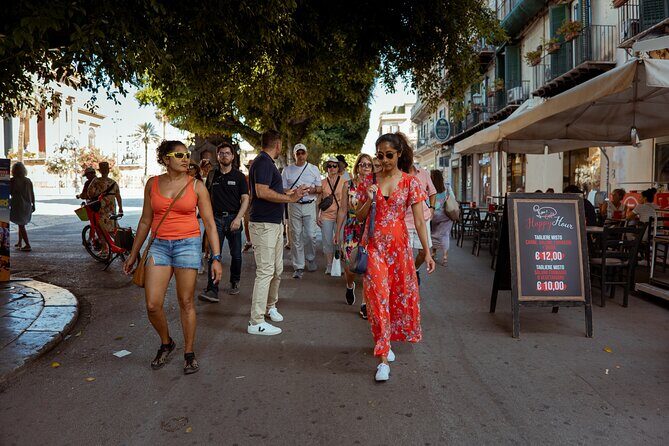
After San Domenico, the route winds through market spaces, including Piazza Caracciolo, where the walk threads through alleys and surrounding streets. This stop is Palermo’s texture: the kind of food scene you remember later when you’re hunting for lunch.
You’ll also see the Fontana del Garraffo (a baroque fountain) in Piazza Marina, down the ancient Cassaro street (now Via Vittorio Emanuele). Fountains like this are more than decoration. They’re landmarks in a city where the street can be confusing if you don’t have anchors.
You can also read our reviews of more tours and experiences in Palermo
Palermo Stock Exchange, Descent of the Judges, and La Martorana (Santa Maria dell’Ammiraglio)
A standout stretch here is how the tour connects economics, law, and religion into one continuous urban story.
You’ll pause at the Palermo Stock Exchange site in the Palazzo delle Finanze. It was one of ten active Italian exchanges until 1997, and it dates back to trading opening in 1845. Even if you’re not a finance person, it adds a layer: Palermo wasn’t only a cultural melting pot—it was also a working administrative and commercial center.
Then comes the descent of the Judges, named from the Judges of the Praetorian Court who once lived there. The street name ties geography to governance, and it’s the kind of detail that makes the city feel mapped to real roles and real power.
The tour then heads to Santa Maria dell’Ammiraglio, also known as La Martorana. This is where Palermo’s cross-cultural identity becomes clear in one glance:
- Built 1143–1185
- Tied to the Greek-Byzantine clergy traditions
- The church is associated with services still conducted in ancient Greek or Albanian
That’s a powerful stop if you like places where history doesn’t sit behind glass. It’s also a great contrast to the baroque squares you’ll see later.
Piazza Pretoria and Quattro Canti: Baroque Geometry You Can’t Miss
After the church-and-market stretch, the tour shifts to the iconic open squares.
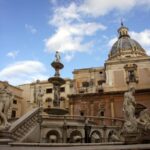
At Piazza Pretoria, you’re near the Kalsa district and close to the Quattro Canti intersection. The standout is the fountain and the idea behind the space: it was created for the garden of don Luigi de Toledo in Florence, and later the Palermo location developed a garden plot tied to local religious ownership and political pressure. Then a Florentine sculptor, Francesco Camilliani, was commissioned for the project.
A few blocks away is Quattro Canti—also called Piazza Vigliena. This is Palermo’s baroque street-corner theater: four buildings outline the square, constructed 1608–1620, with decorative work completed by 1663. It’s popular for a reason. It’s visually complete, and once you see it, you understand why Palermo’s major streets feel like they connect from one central stage.
If you’re using this tour as your first-day orientation, these squares are where you lock in the city’s layout.
Cattedrale di Palermo: Norman Architecture Inside (Where the Styles Overlap)
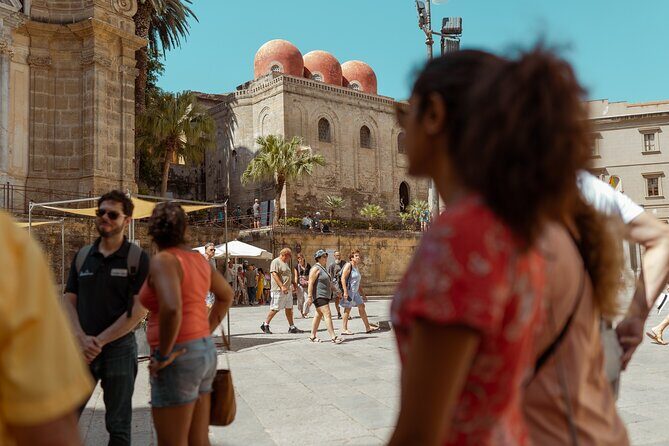
This is your main included interior stop: Cattedrale di Palermo.
The cathedral is presented as Norman architecture in Sicily, built in 1184 by the Normans on a site that previously held a mosque (and even earlier a Christian basilica). That layering is the point. You’re standing in a building that has been re-used and reinterpreted over centuries, so the visual style isn’t one uniform look.
You’ll also hear why it was ambitious on a competitive scale: it was built to surpass Monreale in beauty. The tour frames the result as a mix of styles stacked over time, including:
- Gothic to Medieval
- Arabic influence
- Neoclassical additions
- Even an Arabic reference said to be engraved on a column
Plan on spending the included time inside. Don’t rush it, even if you feel tempted to photograph everything at once. The cathedral is where your brain starts to connect Norman choices to Arabic decorative influences rather than treating them as separate facts.
Villa Bonanno Garden and the Palazzo dei Normanni Area
The tour continues to Villa Bonanno, a garden behind the Palace of the Normans area, in Victory Square. Built in 1905, it’s a quiet break in an otherwise outdoor, stone-heavy route. Palm trees and public statues/busts add a modern civic layer.
You’ll also learn that Roman remains were found here, including mosaics. The tour mentions notable mosaics like the seasons and Orpheus, which are kept in the National Archaeological Museum. This is a good stop if you like the idea that Palermo’s past isn’t only on museum walls—it sometimes turns up under your feet.
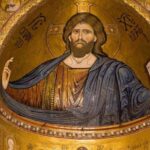
From there, you reach Palazzo dei Normanni (also called the Palazzo Reale). The building is described as extraordinary and tied to Palermo’s long timeline, from early Punic settlement history to later eras. You’ll focus on the Cappella Palatina story through the area viewing and explanation—especially the Arab-Norman character and the mosaic emphasis.
One important detail: entry tickets there are not included. So treat this as a learn-from-outside stop unless you’ve planned separate admission.
Cannolo or Granita Stop: The Food Moment That Helps You Enjoy Later
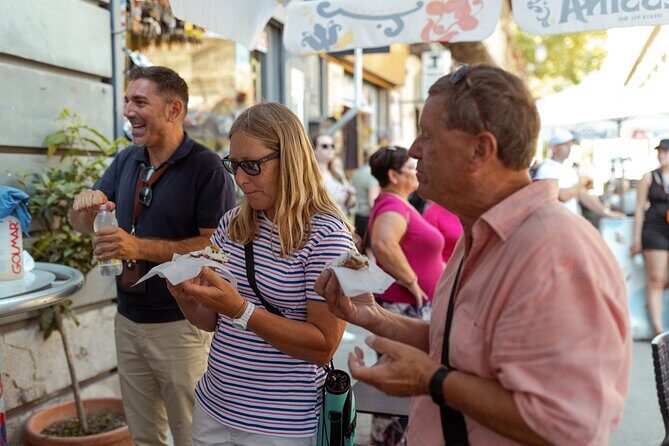
The tour ends with a typical Sicilian treat: cannolo or granita. This is timed well. By the time you reach it, you’ve been walking through churches, squares, and market streets, and sugar and cold refreshment feel like part of the city’s rhythm rather than an afterthought.
If you’re deciding what to do next, this is also where the guide can help you connect the dots. You’ll leave with the names of places you can target later, and with a sense of which neighborhoods to return to based on what you saw.
Who Should Book This Palermo UNESCO Walking Tour
This tour is a strong fit if:
- You have a short stay and want a high hit-rate introduction
- You like learning how Norman-Arabic architecture shows up in everyday city spaces
- You want a mix of monuments plus markets, so the trip feels like Palermo, not a museum checklist
- You prefer a small group pace with time for questions
Skip it or plan differently if:
- You want long, slow time inside multiple large interiors
- You’re hoping for full palace-side exploration beyond the cathedral
- You dislike walks where crowds and street crossings are part of the experience
Should You Book? My Practical Recommendation
Yes—if you want the best use of a half-day in Palermo. This tour is priced reasonably for what it accomplishes: a guided explanation of Palermo’s UNESCO-relevant Norman-Arabic story, plus real cathedral time and an included Sicilian treat.
If you’re the type who loves interiors, plan on upgrading your day afterward with separate tickets for palace/church areas that aren’t included here. But as a first orientation, this is one of the better ways to understand Palermo fast, not just see it.
FAQ
How long is the Palermo UNESCO walking tour?
It lasts about 3 hours.
What is the price per person?
The price is $31.88 per person.
Is the tour in English?
Yes, the tour is offered in English.
What attractions include admission tickets?
Entrance to the Cathedral of Palermo is included. Other major sights on the route are viewed from outside, and additional tickets (like at the Royal Palace area) are not included.
Where does the tour start and end?
It starts at Via Volturno, 44, 90138 Palermo, and it ends back at the same meeting point.
Is the tour refundable if plans change?
Free cancellation is available up to 24 hours in advance for a full refund.