Palermo clicks into place fast on this walk. In just 2–3 hours, you pass baroque squares and Norman-Baroque churches, then wind up at the sights around Teatro Massimo with Capo Street Market as the food break. I also love the small group feel and the way guides like Barbara (and others such as Manuela, Margarita, and Lara) keep the story clear and fun, but you should plan for extra entry fees at some churches and for route changes if a site isn’t open.
You start in the historic center and end near Palermo’s big opera landmark, so the timing works well if it’s your first day. You’ll use a mobile ticket, and the pace stays realistic for a city walk, with short stops that actually let you look instead of just rush.
One practical consideration: this experience depends on good weather, and several of the standout interiors have admission that’s not included. If rain hits, expect shorter, wetter viewing stretches and bring a jacket.
In This Review
- Key things that make this Palermo walk worth it
- Price and what you actually get for $54.42
- Start at Piazza Pretoria: baroque drama with a famous fountain
- Quattro Canti: the baroque square that turns into your orientation point
- Santa Caterina d’Alessandria cloister: monastery calm, then a sweet turn
- La Martorana (Santa Maria dell’Ammiraglio) when it’s open: Norman meets Baroque
- Giudecca and the Jewish quarter: Palermo’s story goes past baroque
- Chiesa Del Gesu: marble decoration that hits hard
- The historic main street with noble palaces and Sicilian craft shops
- Cattedrale di Palermo: Norman kings, Santa Rosalia, and the silver chapel
- Capo Street Market: the tour’s best “taste Palermo” payoff
- Teatro Massimo area: neoclassical grandeur near Piazza Giuseppe Verdi
- What to expect on the ground: pace, group size, and how to pack
- Guides matter here: Barbara, Manuela, Lara, and the fun-to-learn factor
- Should you book Discover Palermo?
- FAQ
- How long is the walking tour in Palermo?
- What language is the tour offered in?
- How big is the group?
- Are entrance tickets included for churches and sites?
- What happens if Santa Maria dell’Ammiraglio (La Martorana) isn’t open?
- What if it’s bad weather?
- Can I cancel for a full refund?
Key things that make this Palermo walk worth it
- Small-group pacing (max 10) keeps the walk from feeling like a cattle line.
- Baroque squares back-to-back: Piazza Pretoria and Quattro Canti make great photo stops without long transfers.
- Monastery + sweets connection at Santa Caterina d’Alessandria gives you more than just church façades.
- Norman-Baroque contrast when La Martorana is open (and a Plan B when it isn’t).
- Jewish quarter context in the Giudecca area adds depth beyond the usual baroque tour.
- Capo Street Market is the practical, tasty payoff—where you can ask your guide what to try.
Price and what you actually get for $54.42
At $54.42 per person for a 2–3 hour walking tour, you’re paying for three things: (1) a local guide, (2) a tight route that covers multiple “must-see” zones in one go, and (3) interpretation that helps you read Palermo instead of just passing it.
Some stops are free to look at (squares and exterior viewing), and others may require paid entry on-site. That mix matters. If you expect every church to be included, you’ll feel the gap. If you like a walking route that prioritizes the big highlights and gives you options for interiors, the price starts to make sense fast.
The short duration also helps value. Two to three hours is long enough to feel like you “did Palermo,” but short enough that you still have energy to explore on your own afterward.
You can also read our reviews of more tours and experiences in Palermo.
Start at Piazza Pretoria: baroque drama with a famous fountain
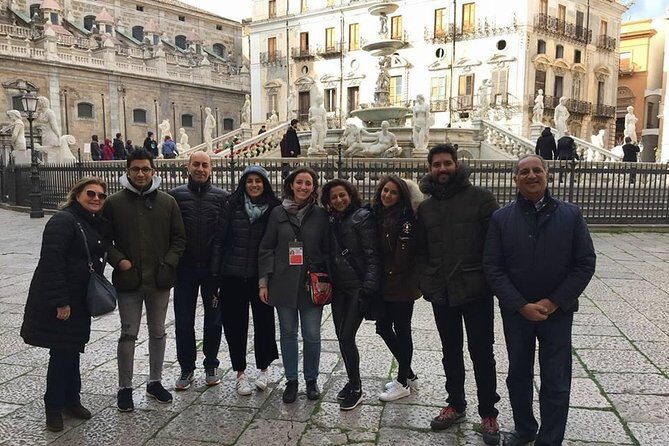
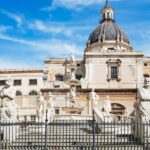
Your walk begins at Piazza Pretoria, a square that instantly tells you Palermo loves spectacle. The star is the white Carrara marble fountain often called the fountain of shame—yes, it’s playful, yes, it’s detailed, and yes, it’s the kind of landmark you’ll keep spotting in your photos later because it’s so crisp.
This stop also pairs nicely with the surrounding palaces and civic buildings. You get visual context without a museum ticket: the Town Hall area and the nearby palazzo façades help explain how these squares worked as public stages.
Time on the square is short (around 20 minutes), so I’d use it for two things: a slow look from different angles and a quick scan for the baroque details your guide calls out. This is where the tone of the whole tour sets in.
Quattro Canti: the baroque square that turns into your orientation point
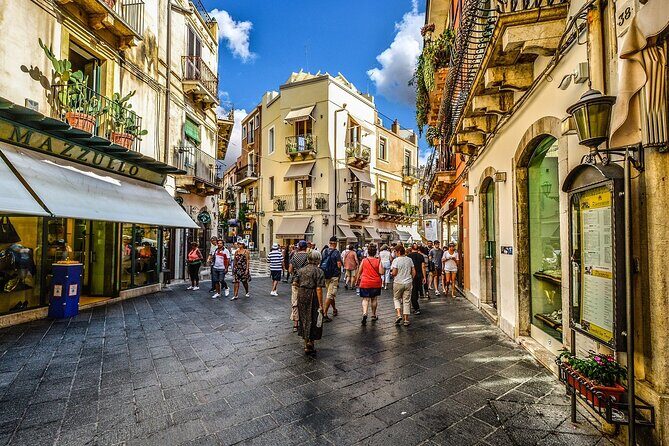
Next comes Quattro Canti, the “center” of the historic center—at least in the sense that the streets meet and the architecture frames your sense of direction. It’s a seventeenth-century Baroque crossroad, and it’s much more interesting than it sounds on paper.
This stop is brief (about 15 minutes), but it’s useful. If you want to wander Palermo later without feeling lost, Quattro Canti is a great mental anchor. After this, many of the neighborhoods around you will feel less random and more like a map you can navigate.
Santa Caterina d’Alessandria cloister: monastery calm, then a sweet turn
At the Church and Monastery of Santa Caterina d’Alessandria, you get something Palermo doesn’t do everywhere: the quiet, close-in feel of a cloister, plus the distinctive monastic confectionery connection inside the former Dominican monastery.
The tour time here is about 20 minutes. One important note: the church interior may be possible with a ticket you pay for. The cloister and the monastery space can still be a highlight even if you choose not to pay for extra access.
Why I think this stop is valuable for your money: it’s not just a pretty façade. You’re seeing how religious life shaped a building—and how that life intersects with local food traditions. If you like architecture but also enjoy cultural details, this is a satisfying mid-tour change of pace.
La Martorana (Santa Maria dell’Ammiraglio) when it’s open: Norman meets Baroque
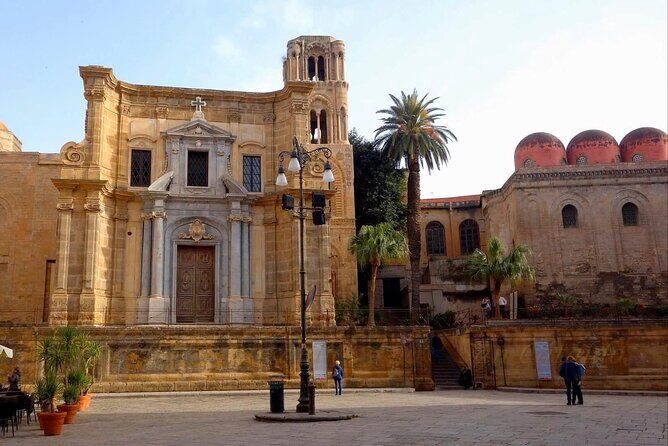
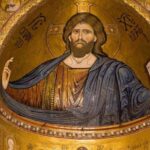
Santa Maria dell’Ammiraglio, also known as La Martorana, is one of Palermo’s “how is this so beautiful?” churches. It’s described as a unique example blending Norman and Baroque art styles, and it’s often considered among the city’s most striking churches.
Here’s the catch you should plan for: it’s visitable only when the site is available for visits. If it’s not open, the tour route may shift, or the walk may include another church such as Chiesa del Gesu instead.
This matters because it changes the “interior payoff” of the tour. If you’re a fan of church interiors, I’d bring flexibility into your schedule. When La Martorana is accessible, you’ll get a strong contrast to the baroque squares you already saw—more atmosphere, more detail, and a deeper look at Palermo’s layered identity.
Giudecca and the Jewish quarter: Palermo’s story goes past baroque
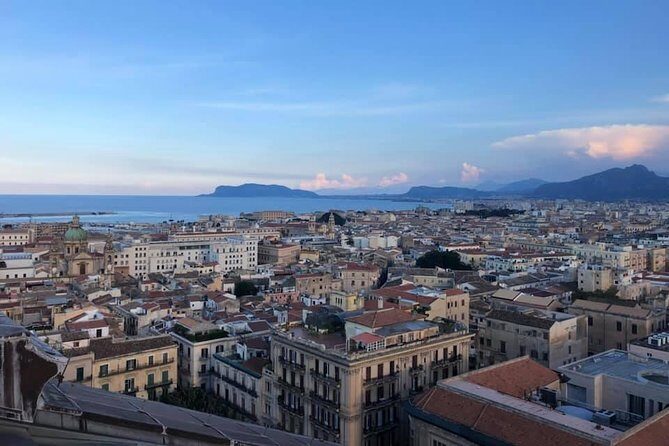
The Giudecca stop takes you into the part of the Meschita neighborhood where the Jewish community lived until their expulsion in 1493. This is one of those stops that feels quick on the clock (about 15 minutes), but it changes how you read the city.
Instead of treating Palermo as just a collection of pretty churches, you’re hearing about communities that existed there and the forced rupture that followed. It adds context to the neighborhoods you’re walking through, and it gives the baroque setting a human timeline behind it.
If you want a walking tour that doesn’t stay trapped in architecture alone, this is a real win.
Chiesa Del Gesu: marble decoration that hits hard
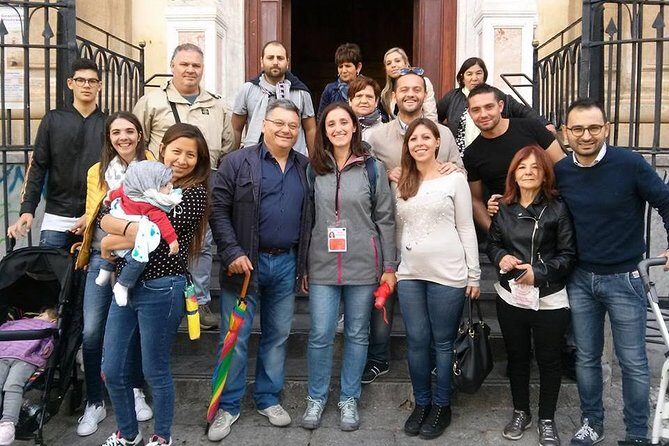
Next is Chiesa Del Gesu, often described as an astonishing Palermo Baroque church with marble decorations so rich they can feel overwhelming—in a good way.
This stop is around 25 minutes, and entrance may require a ticket you pay for. That means the value depends on your comfort with paid entries. If you enjoy interiors, this is one of the places worth it. If you’d rather spend your money elsewhere, you can still appreciate the exterior and the general baroque style context from the street.
Also: the walk keeps moving, so don’t plan this stop as “sit and stare for an hour.” Use it to look carefully, then let the guide’s explanations help you notice what you’d otherwise miss.
The historic main street with noble palaces and Sicilian craft shops
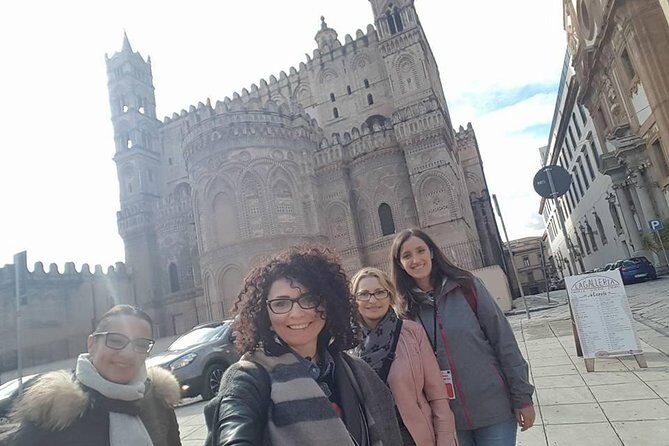
Between the church and cathedral area, you’ll walk along one of Palermo’s most ancient and important streets. The vibe is the real deal: noble palaces outside, plus shops for Sicilian craftsmanship.
I like this stretch because it’s the bridge between monuments. It’s where the tour shifts from “big landmarks” to “how people live with these landmarks.” Even if you don’t buy anything, you’ll get a more grounded sense of the city.
Cattedrale di Palermo: Norman kings, Santa Rosalia, and the silver chapel
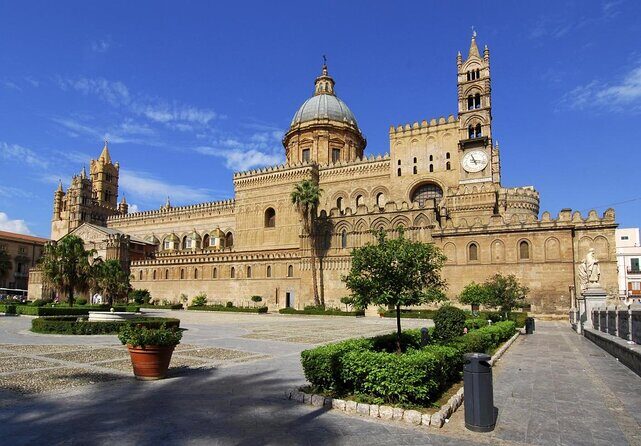
At Cattedrale di Palermo, you’ll see the city’s most important church with a mix of styles and cultures. Two highlights are called out: the tombs of the Norman kings and the silver chapel of Santa Rosalia.
This stop is about 20 minutes, and admission is listed as free for this part of the tour experience. Even with limited time, the cathedral matters because it anchors the political and religious story of the city. Palermo wasn’t one culture layered neatly on top of another. It was a change, a conquest, an adaptation—then another change.
If you want one practical tip here: stand where you can take in the overall space first, then let your guide point out the exact areas tied to the Norman and Rosalia story. It’s the difference between looking at a church and understanding it.
Capo Street Market: the tour’s best “taste Palermo” payoff
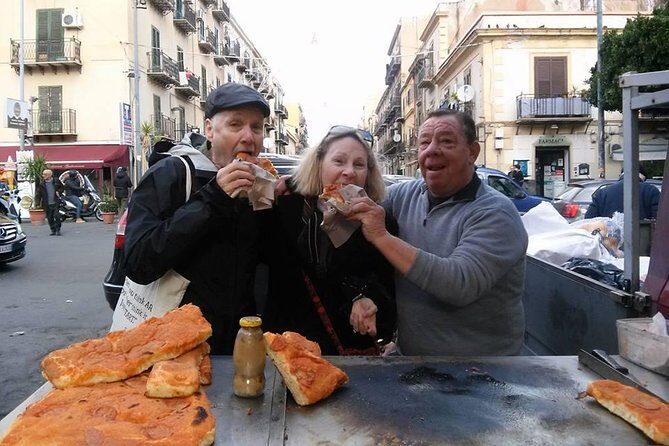
Then you reach the Capo Street Market, a historical food market filled with fruit, vegetables, fish, and spices. This is the part of the walk that feels most like Palermo-as-a-city, not Palermo-as-a-postcard.
Time is around 20 minutes, and admission is free. That makes it a low-cost, high-reward stop—especially if you like street snacks and regional specialties.
From the guide style shown in past groups, you’ll likely get helpful direction on what to try. One recurring theme is that guides help you navigate the market for good food, including favorites like arancini. That’s the practical side of a guided market stop: you’re not just wandering, you’re picking with confidence.
If you’re hungry (and you will be), this is where you should be.
Teatro Massimo area: neoclassical grandeur near Piazza Giuseppe Verdi
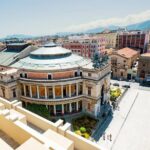
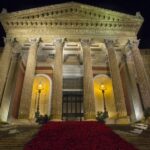
The final monument stop is Teatro Massimo, the opera theater often noted as the largest in Italy and third in Europe, in neoclassical style. The tour time here is brief (about 15 minutes), and admission is not included, so treat this as viewing time unless you choose to pay separately.
Even without entering, it works as a dramatic ending. The tour wraps up near Piazza Giuseppe Verdi, dominated by Teatro Massimo. If you want to continue your evening, this location makes it easy to plan a post-walk stroll.
What to expect on the ground: pace, group size, and how to pack
This is a walking tour in central Palermo, designed to cover a lot without long transit time between sites. With a maximum of 10 travelers, it stays conversational. You also hear your guide’s explanations clearly in most cases, since the pace doesn’t require constant crowding.
Bring:
- Comfortable shoes (old streets add up)
- A light rain layer, since the experience requires good weather
- A little cash or card readiness for any sites with paid admission
English is supported. And because the tour uses a mobile ticket, you’ll want your phone charged.
Guides matter here: Barbara, Manuela, Lara, and the fun-to-learn factor
The standout pattern from past experiences is that the guide isn’t just reciting dates. Guides such as Barbara, Manuela, Margarita, and Lara have been praised for keeping the walk engaging and for building connections between sites—so the cathedral doesn’t feel random after the baroque squares, and the market doesn’t feel disconnected from the rest of the city.
That’s what you should look for when booking any tour: do you want a checklist, or do you want a story you can actually follow? This one aims for the story. If you’re traveling with teens, it also helps to choose a guide who can keep things moving and explain clearly, not just lecture.
Should you book Discover Palermo?
Book it if you want:
- A 2–3 hour overview that hits baroque squares, church highlights, the Jewish quarter area, and the Capo Street Market
- A structured route that helps you get your bearings fast
- Guides who make the walk feel lively rather than dry
Skip it (or adjust expectations) if you:
- Need every interior included without extra tickets
- Have no flexibility if a specific church (like La Martorana) isn’t open
- Don’t want your plan affected by rain, since the experience depends on good weather
If you’re spending only a short time in Palermo, this is a solid first move. It gives you enough context to wander afterward with confidence—and enough food-and-architecture texture to make the city feel real.
FAQ
How long is the walking tour in Palermo?
It runs about 2 to 3 hours.
What language is the tour offered in?
The tour is offered in English.
How big is the group?
There is a maximum of 10 travelers.
Are entrance tickets included for churches and sites?
Some stops have admission free, while others have admission not included and require you to pay for entry at the site (for example, places like Santa Caterina d’Alessandria, La Martorana, Chiesa del Gesu, and Teatro Massimo).
What happens if Santa Maria dell’Ammiraglio (La Martorana) isn’t open?
It’s visitable only when the site is available for visits. The tour offers an alternative route or may include the Church of Jesus instead or in addition.
What if it’s bad weather?
This experience requires good weather. If it’s canceled due to poor weather, you’ll be offered a different date or a full refund.
Can I cancel for a full refund?
Yes. You can cancel up to 24 hours in advance for a full refund.