REVIEW · SICILY
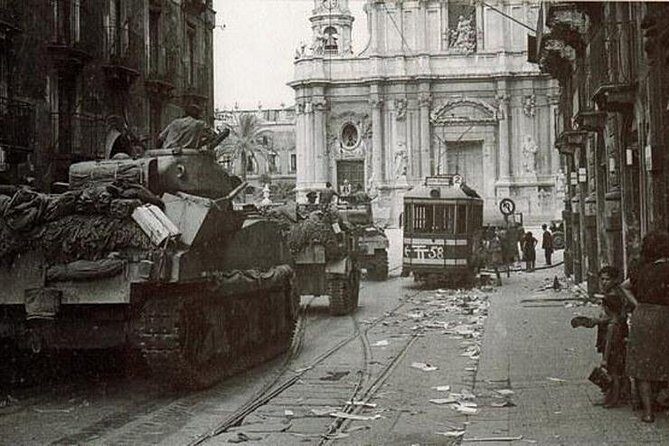
CATANIA 1943: Husky operation
Book on Viator →Operated by Etna 'Ngeniousa · Bookable on Viator
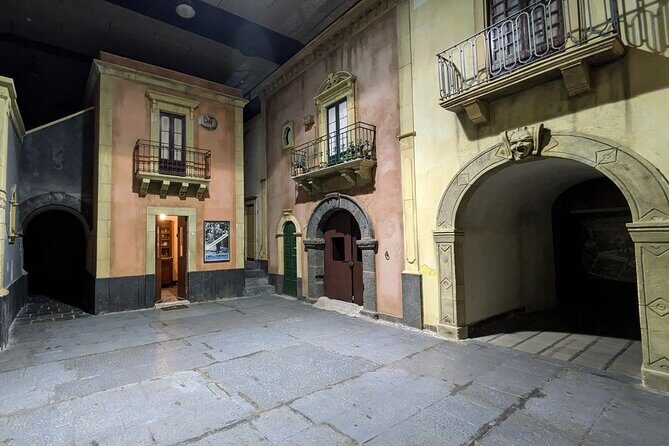
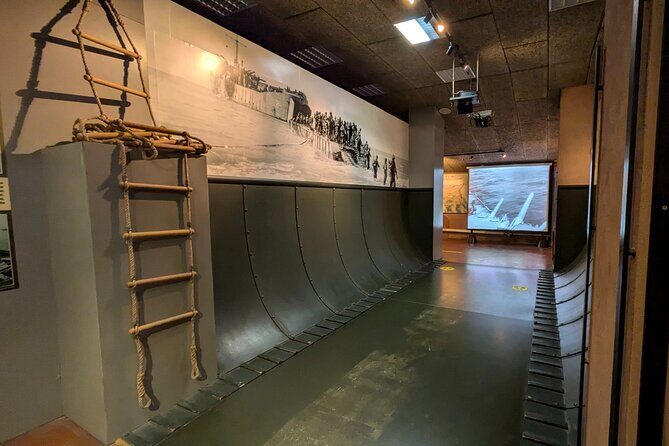
War left marks you can still read in Catania. This private, English-language tour ties together Operation Husky storytelling with very real, very visible damage across central Catania. I particularly love how the day starts at the Museo Storico dello Sbarco in Sicilia 1943 with a detailed reconstruction and solid documentation of the fighting.
I also like that the experience doesn’t feel like a generic “look and move on” walk. With the guide you may get access to parts of the city that normally aren’t open to the public, and the tone stays human, not textbook. One drawback to consider: this is a WWII route focused on bombings and persecution, so it can feel heavy if you’re hoping for carefree sightseeing.
In This Review
- Key highlights you’ll notice fast
- Why CATANIA 1943 works better than a typical war walk
- Museo Storico dello Sbarco: Operation Husky and Fustian explained on site
- Roman Amphitheater as an air-raid shelter: history in the same square
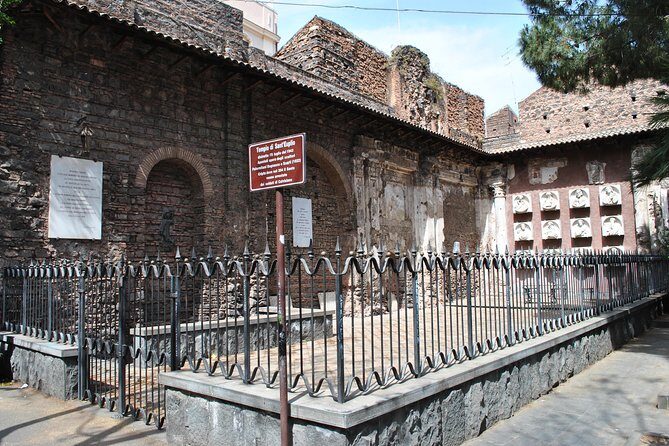
- Via Sant’Euplio ruins: July 1943 bombings you can actually spot
- Piazza del Duomo finish: the bomb marks turned into a place for peace
- What the tour is like in real life (timing, group, and access)
- Price and value: is $94.68 worth it?
- Who this tour suits best (and who might skip it)
- Should you book CATANIA 1943?
- FAQ
- Where does the tour start and end?
- How long is the experience?
- Is the tour private?
- What language is the tour offered in?
- What’s included in the ticket price?
- Are mobile tickets used?
- When is the tour available?
- Can I cancel for a full refund?
- Are service animals allowed?
Key highlights you’ll notice fast
- Operation Husky, with focus on Operation Fustian and the battle of Simeto
- Two-hour museum start with admission included
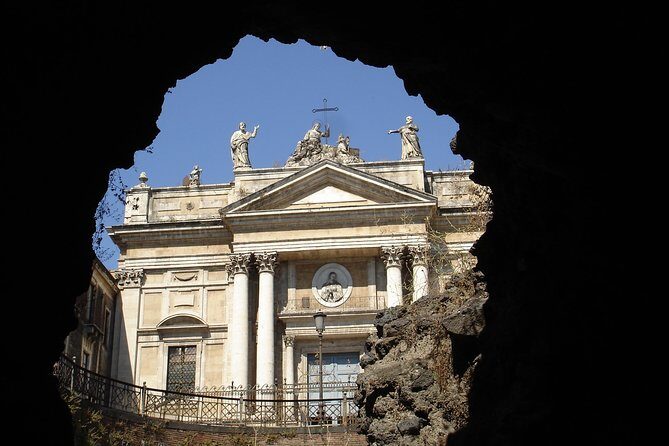
- Roman Amphitheater used as an air-raid shelter during World War II
- Sant’Euplio scars you can still see, tied to April 16 and July 1943 bombings
- A meaningful stop in Piazza del Duomo at an altar connected to the wartime marks
- A guide-led route that can include places not usually accessible to the public
Why CATANIA 1943 works better than a typical war walk
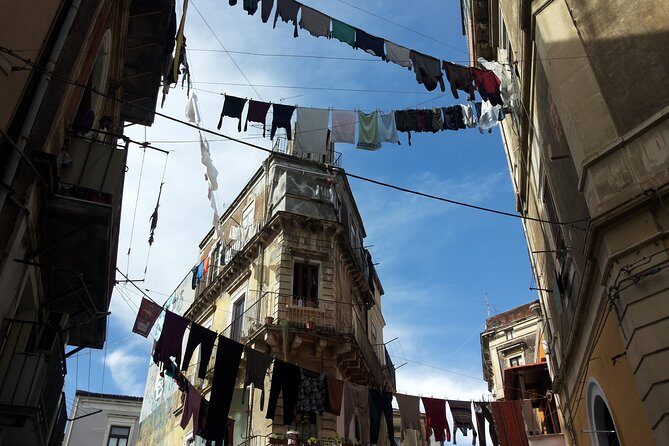
Catania has that rare mix of layers. Roman stone sits under later streets. Churches rise and fall. Then WWII shows up again, right on the surface. This tour uses that layering on purpose.
You get a clear storyline first, then you test it against real locations. That’s the magic trick here. Start with the museum. Then walk to the amphitheater and church ruins and let the buildings do the explaining. When you leave Piazza del Duomo, you’re not just remembering dates—you’re seeing how a city absorbed trauma and kept going.
The format also helps. It’s a private tour for just your group, offered in English, and you’ll get a mobile ticket. The pace is built for a short, concentrated route—about 3 hours total—so you’re not stuck doing all-day roaming.
You can also read our reviews of more tours and experiences in Sicily.



Museo Storico dello Sbarco: Operation Husky and Fustian explained on site
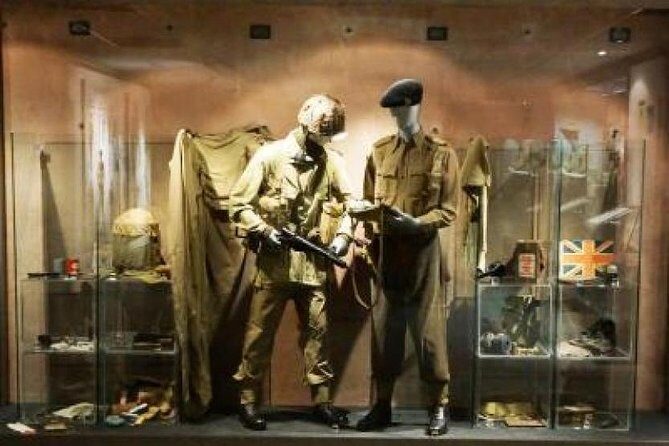
Your first stop is the Museo Storico dello Sbarco in Sicilia 1943, and it’s the foundation of the whole experience. You’ll spend about 2 hours here, and admission is included.
This isn’t presented as vague “big picture” history. The museum focuses on the Allied landing in Sicily and gives you an in-depth look at Operation Husky, especially Operation Fustian and the battle of Simeto. The museum uses an accurate historical reconstruction and a lot of documentation, so you can connect what you’ll later see outside to what the museum has already laid out.
Why I think this matters for your enjoyment: without that start, the outdoor stops can feel like scattered memorials. With it, those visible wounds in the stone become part of a chain of events. You stop treating the damage like decoration and start reading it as evidence.
Also, the museum sets the tone. The guides here tend to keep the story grounded in what happened on the ground and what it meant for people—not just strategy and maps.
Roman Amphitheater as an air-raid shelter: history in the same square
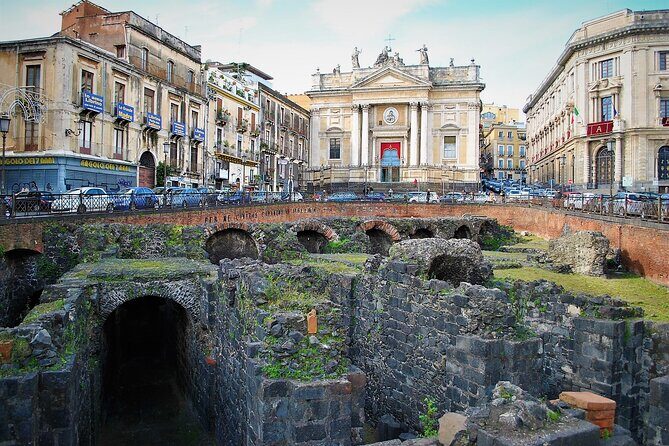
After the museum, you head to the Roman Amphitheater of Catania for about 30 minutes. Admission is included for this stop too.
This amphitheater is known as a monument symbol of Roman Catania. But during World War II, it had another job: it was used as an air raid shelter. That detail changes how you view the place. You’re not just looking at ancient engineering—you’re picturing people trying to survive a modern attack inside older walls.
In the same area, you can still see remains of the church of Sant’Euplio, which was bombed on April 16, 1943. That church ruin has become a symbol and memorial of victims of war and persecution. It’s one of those places where the stones feel quiet, but the meaning is loud.
A practical note: this segment is short, but it’s dense. You’ll want to keep your attention switched on here. Let the guide connect the museum story to what the city reveals in this square.
Via Sant’Euplio ruins: July 1943 bombings you can actually spot
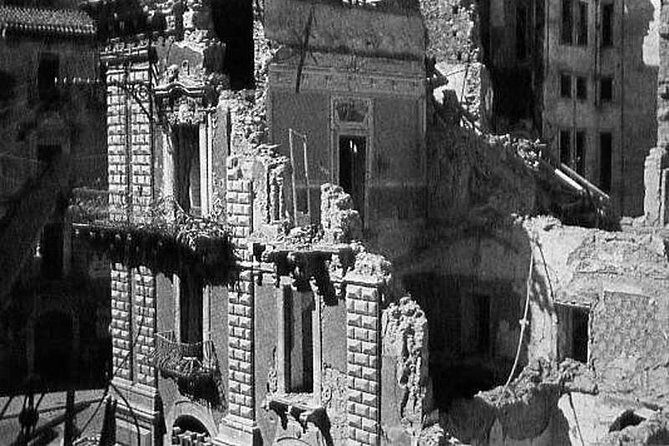
Next comes a quick but pointed walk along Via Sant’Euplio for about 10 minutes. Admission is free.
Here, the ruins of the ancient church of Sant’Euplio still show the wounds from the bombings of July 1943. This is the kind of stop that can be easy to rush past, but it’s exactly why the tour’s order makes sense. After learning the broader WWII story at the museum, you’re now reading specific moments through physical traces.
Even with limited time, you’ll get a sense of how repeated strikes left layers of impact. It’s not one event and then silence. It’s damage that deepened over time, carried through a city’s daily routes.
Piazza del Duomo finish: the bomb marks turned into a place for peace
The tour ends in the heart of Catania at Piazza del Duomo, with about 15 minutes for the final reflection.
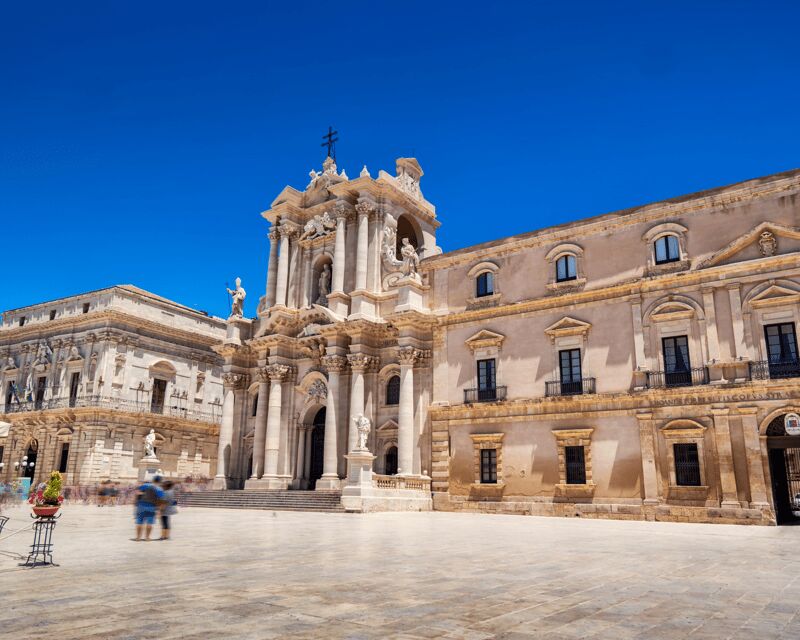
In this square, you’ll pause at an altar that bears signs of the bombings. After the war, that site became a place of prayer for peace. That shift—from destruction to prayer—is the kind of detail I appreciate because it doesn’t pretend the harm disappeared. Instead, it shows how a community chose a future in the same location where pain was remembered.
If you like tours that end with something more human than “thanks for coming,” this part lands well. You get a moment that’s not just informative. It’s also quietly emotional, in a grounded way.





What the tour is like in real life (timing, group, and access)
This experience is designed for a tight, 3-hour window. You start at the museum at Piazzale Rocco Chinnici, Catania, and you finish at the Roman Amphitheater area (P.zza Stesicoro). The exact starting and ending points are close enough to feel connected, but different enough that you’ll use the city’s streets as part of the story.
It’s also a private tour/activity, meaning only your group participates. That matters because it keeps the pace flexible. When people have slower movement, a good guide can adjust without turning it into a race.
One review shared a very practical example: the guide Oreste helped by letting an elderly mom ride in his car from the museum to the next part of the route. You shouldn’t assume car help is always available, but it does show the approach can be thoughtful when someone needs extra support.
The tour is offered in English, and it has group discounts. You’ll also receive confirmation at booking, and service animals are allowed. It’s near public transportation, which is handy when you want to keep your day in Catania simple.
Price and value: is $94.68 worth it?
At $94.68 per person, this isn’t the cheapest history tour in Sicily. But you’re also not paying for just a walk. You’re paying for a guided WWII narrative anchored to paid entry sites.
Here’s the value math that matters:
- The first stop includes 2 hours at the museum with admission included.
- The amphitheater stop also has admission included.
- The remaining stops (Via Sant’Euplio and Piazza del Duomo) are free to enter.
So your ticket price mostly covers the guided structure plus two paid admissions. On top of that, it’s private and led in English. If you’ve ever done a “cheap group” tour where you spend half the time herding people, you’ll appreciate the difference: your guide can slow down for questions and connect dots as you go.
I also think the context you get at the museum changes the outdoors portion, so you’re not just doing two separate activities. You’re doing one connected lesson, with the city as your classroom.
If you’re traveling solo, the price might feel steep. If you’re with a partner or small group, it often starts to look more reasonable for a private experience with admissions included.
Who this tour suits best (and who might skip it)
This tour fits best if you want WWII history tied to real streets and monuments.
It’s ideal for:
- History-minded travelers who like specific operations and battles, not just broad overviews
- People who enjoy memorial sites and understanding how cities remember
- Travelers who want a guided route that connects museum learning to visible evidence in the city
It may be less ideal if:
- You mainly want classic sightseeing with light storytelling
- You’d rather avoid locations tied to bombing and persecution
The pace is short and manageable for many people, and the route is built around major points. But it does include outdoor ruins and squares, so wear shoes you’re comfortable walking in for a couple hours.
Should you book CATANIA 1943?
I’d book it if you like history that you can see. This isn’t only about what happened. It’s about how Catania carries what happened—into Roman structures, into church ruins, and into a Duomo-square reminder where wartime marks became a place for peace.
You’ll get strong museum context, then you’ll walk through the city and test that context against what’s still standing. If you’re the kind of traveler who appreciates meaning in the details—dates tied to scars in stone—this tour delivers.
One final tip: go in ready to pay attention. This route rewards focus. You’ll leave with a clearer understanding of Operation Husky and Operation Fustian, and you’ll see the bombings of April 16, 1943 and July 1943 as part of a single story, not random facts.
FAQ
Where does the tour start and end?
The tour starts at the Museo Storico dello Sbarco in Sicilia 1943 at Piazzale Rocco Chinnici, 95129 Catania, and it ends at the Roman Amphitheater of Catania near P.zza Stesicoro, 95124 Catania.
How long is the experience?
It lasts about 3 hours.
Is the tour private?
Yes. It’s a private tour/activity, and only your group participates.
What language is the tour offered in?
The tour is offered in English.
What’s included in the ticket price?
Admission tickets are included for the first stop (the historical landing museum) and the second stop (the Roman Amphitheater). The later stops are free.
Are mobile tickets used?
Yes, the experience uses a mobile ticket.
When is the tour available?
It lists opening hours for Tuesday through Sunday from 10:00 AM to 1:00 PM.
Can I cancel for a full refund?
Yes, free cancellation is available if you cancel up to 24 hours in advance of the experience start time.
Are service animals allowed?
Yes, service animals are allowed.