REVIEW · SICILY
bodyrafting Alcantara gorges
Book on Viator →Operated by MrExcursions · Bookable on Viator
Canyons get serious at Alcantara. This 2-hour body rafting run in Sicily combines a volcanic canyon setting, hand-on canyon basics, and real time on the water as you’re carried downstream through splashes, jumps, and slides. I love how the tour starts with an 800-meter trek into the canyon, so you see those dramatic lava walls up close (up to 30 meters). I also like the small-group cap (up to 12), with guides helping you through swims, rock climbing, and quick rapids—so you’re not just thrown into the water and told good luck. The main drawback: it’s not a gentle float. If you can’t handle rushing water, climbing on slick rock, or staying steady when you’re tired, this can feel stressful and potentially risky.
You also get the kind of natural show you can’t fake: Alcantara’s walls are shaped by centuries of water work inside a gorge formed by volcanic eruptions. Just know the experience is weather-dependent, and the water can be rough enough to surprise you.
In This Review
- Key highlights to know before you go
- Entering the Alcantara Gorge: what makes it special
- The 800-meter trek up: where you set your pace
- The rapids section: small water, big attitude
- Body rafting downhill: splashes, jumps, and letting go
- How the guide support really helps (English and French mentions)
- Group size, waiting time, and why it matters
- Weather, water temperature, and clothing you’ll actually need
- Price and value: is $94.93 worth it?
- Who should book this and who should skip it
- Meeting point and timing: make the first hour count
- Should you book body rafting at Alcantara Gorges?
- FAQ
- How long does the body rafting experience last?
- Where does the tour start?
- What’s the group size?
- What fitness level do I need?
- Is the tour offered in English?
- What if the weather is poor?
Key highlights to know before you go
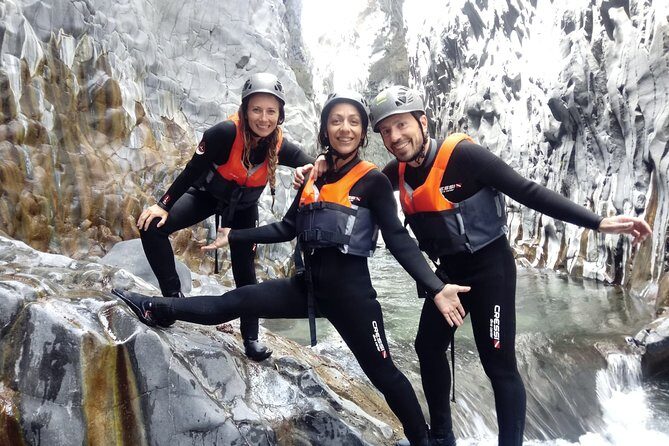
- Volcanic canyon walls up to 30 meters: you spend time inside the real Alcantara drama, not just at the viewpoint.
- 800-meter river trekking ascent first: you earn the downhill—legs warm up before the rapids start.
- Hands-on canyon basics: you learn by doing, with guide support through the tricky parts.
- Body rafting, not tubing: you move by the current through splashes, jumps, and slides.
- Small group size (max 12): more attention and less waiting than larger groups.
- Multiple start times: easier to match with your day in Sicily.
Entering the Alcantara Gorge: what makes it special
The Alcantara Gorges are one of those Sicily nature stops where the setting feels oddly intimate. Instead of hiking around the canyon from the outside, you move into it and work your way along the river corridor.
The gorge formed after volcanic eruptions, and the result is striking: dark, textured lava rock with shapes worn by water over the centuries. It’s not a “look, take a photo, leave” kind of place. During your trekking section, the canyon walls rise up to around 30 meters, so you get that sense of being surrounded—cool air, rushing water sounds, and tight views through rock.
This tour also leans into the learning side. You’re not just getting adrenaline. The guides teach you the basics of canyoneering and then support you through the steps that matter: moving over uneven ground, handling short rapids, and making safe choices when the water gets pushy.
You can also read our reviews of more tours and experiences in Sicily.
The 800-meter trek up: where you set your pace
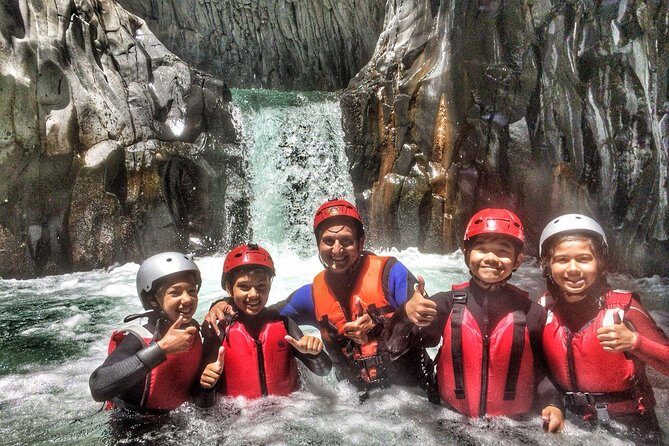
Right from the start at Gole Alcantara Botanical and Geological Park (Via Nazionale, 5, 98030 Motta Camastra, ME), you’ll head into the canyon area with an 800-meter river trekking ascent.
This uphill isn’t just warm-up. It’s part of why the experience feels like a full adventure rather than a quick splash session. You’ll move through lava rock with unique shapes carved over time by water, and you’ll start noticing where the river flows and where the footing can be slick.
What I like about this structure is that it helps you judge your readiness. If you’re steady on your feet and comfortable with uneven terrain, the ascent feels like it sets you up for the fun. If you’re out of balance or you rush every step, you’ll feel it fast—because later you’ll be asked to swim, climb, and react quickly when the water pulls.
Also, the walls are high in sections, so you’ll feel the canyon’s scale more during the trek than you would at a quick overlook.
The rapids section: small water, big attitude
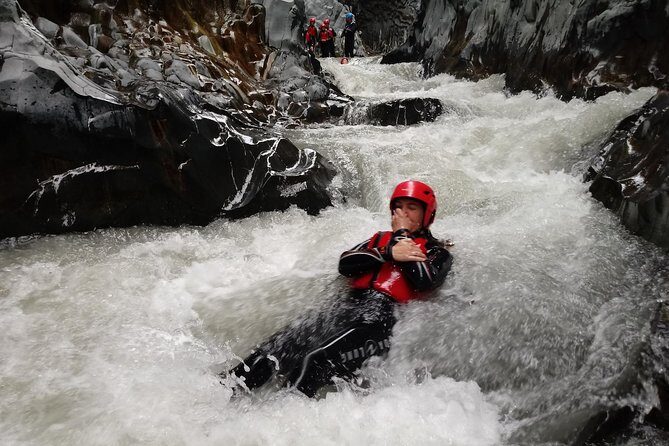
Once you’re in position, expect small rapids along the route. “Small” doesn’t mean “easy.” The water can push you into moments that require action, like short swims and climbing onto rocks.
This is where the guide team matters. The tour is described as being carried out with maximum safety, and the practical reality is that you’re supported through the route so you’re not figuring it out alone—especially when you need to move from the river to rock or when you need to time a jump or pass.
From a comfort standpoint, consider these things:
- You’ll likely get wet quickly, even if you’re bracing for it.
- Some parts may require you to hold your body up and keep your balance while the water rushes around you.
- Slick lava rock is a real factor. Even with guidance, you have to move carefully.
One review noted an injury after a flip in the rapids and described how bodies can go under water in the stronger flow. Another mentioned someone falling on slippery rock. That’s a good reminder: even when the route is guided, water is water. The fun comes with real conditions.
Body rafting downhill: splashes, jumps, and letting go
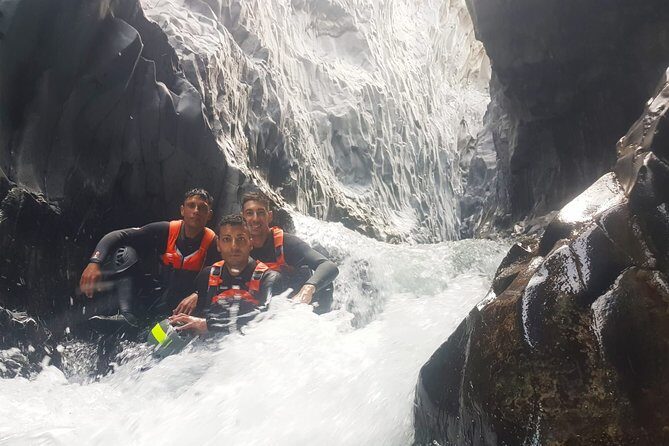
This is the signature moment. After the ascent, you’re carried by the current through areas of splashes, jumps, and slides. The key idea is simple: you spend less time fighting the river and more time staying ready while the current works on you.
The tour language emphasizes that you can feel the “strength” of the canyon as you go. In plain terms, it’s exciting because you’re moving through natural channels shaped by volcanic rock and ancient water movement. You’re not floating on a controlled track. You’re in a real river with uneven pockets and shifting force.
If you’re nervous about water, this is also where you’ll notice it. This isn’t for people who just want a calm river walk. The best mindset is to be alert, follow guide cues, and treat each step like a small decision: when to brace, when to move, and when to go with the current.
And yes, it’s thrilling. If you like the adrenaline rush, this is the part that delivers. But if you dislike unpredictable footing or you get panicky in cold or fast water, you should think twice.
How the guide support really helps (English and French mentions)
The tour is offered in English, and it’s guided by a team that shows you what to do during both the trekking and the water sections.
In one account, an English-speaking guide helped the group through the trekking part. That matters because the ascent is where good instructions reduce mistakes. Clear guidance there means less scrambling later when the rapids get attention.
Another review mentioned a French-speaking guide named Flo delivering a great experience. That’s useful if you’re more comfortable in French, but even if you’re booked in English, it’s a sign the operation uses real guide coaching rather than vague directions.
My practical advice: be ready to listen and move fast. In guided canyon routes, safety isn’t just gear. It’s timing—when the group moves, where you step, and what you do when you reach a water transition.

Group size, waiting time, and why it matters
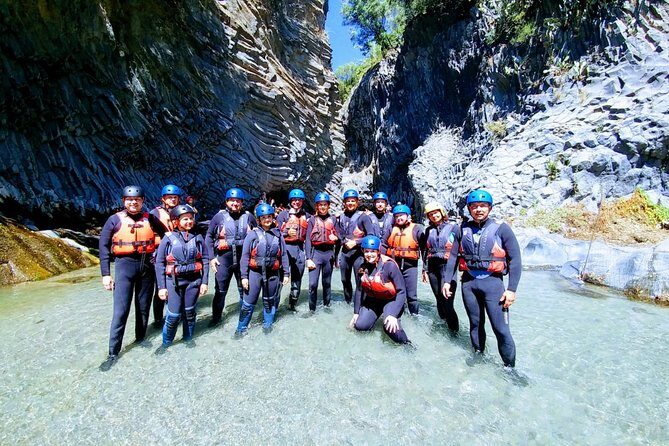
The tour is capped at 12 travelers, and smaller groups usually mean quicker flow through jumps and passes. In the canyon, that’s not a small detail. When you’re waiting at the edge of the water, it’s cold. When you’re waiting on slippery rocks, it’s riskier for your footing too.
One review said their group ended up larger than the size limit they expected, and they wished it were smaller because it became time-consuming waiting for each person’s turn before moving forward. They also pointed out a strong effect from the group mix—small kids in the group meant slower pacing and more complications with cold.
So here’s what I’d do in your planning:
- If you’re booking for maximum adrenaline and minimal waiting, favor the departure slot that best matches your comfort level and group makeup.
- If you’re sensitive to cold, arrive ready to move and expect that waiting can feel longer in canyon conditions.
Weather, water temperature, and clothing you’ll actually need
This experience requires good weather, and that’s not just about safety checklists. Canyon rivers behave differently when conditions change, and the operator is explicit that weather can lead to date changes or refunds.
For clothing, think practical—not fashion.
- You’ll need to accept getting wet for real.
- You’ll likely be in contact with damp, slippery lava rock.
- If you cool down easily, treat that as a planning warning sign.
One review included kids who were cold and shivering, even while others were having fun. That’s a clue that the canyon microclimate and river flow can make the experience feel colder than you expect. Bring a sensible plan for warmth after you finish, because the trek and water work will leave you chilled even if the day starts mild.
Price and value: is $94.93 worth it?
At $94.93 per person for about 2 hours, this isn’t an all-day “see the canyon from a bus” option. You’re paying for two things you can’t copy: guided canyon coaching and time on the river inside a dramatic gorge.
Here’s how I’d judge the value:
- Time: 2 hours is short enough for a quick adventure day, but long enough that you’re not just doing a token water splash.
- Instruction + support: you’re learning basics and being guided through swimming, climbing, and rapids. That adds real value compared with unguided river fun.
- Small group: a max of 12 helps you feel more supported and often reduces waiting.
If you want a guaranteed adrenaline hit with minimal effort, this might feel like too much physical work. If you want a guided, hands-on water day with coaching and real scenery, the price-to-experience ratio starts to make sense quickly.
Who should book this and who should skip it
This is designed for people with moderate physical fitness. That’s a helpful middle ground, but “moderate” still means you should be comfortable with movement in wet conditions.
Book it if you:
- Like adrenaline and can handle a bit of rough water.
- Are comfortable getting wet and moving over uneven, slippery surfaces.
- Want to learn canyoneering basics in a supported way.
- Prefer a guided small group rather than a huge crowd.
I’d skip or rethink it if:
- You struggle with balancing and holding yourself steady in rushing water.
- You don’t like cold conditions or panic in water that can flip you over.
- You’re planning to bring kids under about 12. A review specifically discouraged kids under 12, pointing to cold shivering and difficulty in stronger rapids.
If you have a knee issue, also take it seriously. One review included a knee injury after a flip in the rapids, and that’s a reminder that body rafting isn’t impact-free.
Meeting point and timing: make the first hour count
This activity starts and ends back at the Gole Alcantara Botanical and Geological Park at Via Nazionale, 5 in Motta Camastra. It’s described as near public transportation, which helps if you’re traveling without a car.
Start times vary, so you can usually fit it into your schedule. And since you receive confirmation within 48 hours of booking (subject to availability), build your planning with that in mind.
Weather matters, so if your trip is packed tight, it’s smart to schedule this adventure on a day where you can adjust if conditions change.
Should you book body rafting at Alcantara Gorges?
If you want a guided adventure where you’re actually moving through a volcanic canyon—learning basic canyoneering skills, trekking into the gorge, and then riding the current through rapids—you’ll probably love this. The small-group setup, the coaching focus, and the dramatic canyon walls up to 30 meters make it feel like a real Sicilian nature experience, not a watered-down activity.
But if you’re looking for a calm, low-effort experience, or you’re worried about cold water, slippery rock, or rushing rapids, don’t force it. This isn’t just “pretty scenery.” It’s physical, wet, and occasionally intense.
My rule of thumb: if you can stay calm when water gets chaotic and you follow guide directions quickly, you’ll get the best of Alcantara.
FAQ
How long does the body rafting experience last?
It’s about 2 hours (approx.).
Where does the tour start?
You meet at Gole Alcantara Botanical and Geological Park, Via Nazionale, 5, 98030 Motta Camastra ME, Italy, and the tour ends back at the same meeting point.
What’s the group size?
The tour has a maximum of 12 travelers.
What fitness level do I need?
The activity is for travelers with a moderate physical fitness level.
Is the tour offered in English?
Yes, it’s offered in English.
What if the weather is poor?
The experience requires good weather. If it’s canceled due to poor weather, you’ll be offered a different date or a full refund.