REVIEW · PALERMO
Palermo Walking Tour with Audio and Written Guide by a Local
Book on Viator →Operated by Walking Cap · Bookable on Viator
Palermo can feel like a puzzle that keeps changing shape, and this self-guided walking route is a neat way to solve it at your pace. You’ll move from Arab-Norman monuments to markets and squares, with an audio-and-text guide that also feeds you practical restaurant ideas.
Two things I really like about it: the guide is built for on-your-own timing (pause, replay, move ahead), and it uses Google Maps connections so you’re not constantly hunting down the next stop. One thing to consider: you’ll need a smartphone with internet to activate and run the audio, so plan for battery and data.
In This Review
- Quick reasons this works well in Palermo
- Starting out at San Giovanni degli Eremiti without getting lost
- Palazzo dei Normanni: the oldest royal palace idea gets real
- Palermo Cathedral: Byzantine, Islamic, Latin, and Santa Rosalia
- Teatro Massimo and the city grid you feel in your legs
- Quattro Canti and Piazza Pretoria: architecture as a compass
- La Vucciria market: classic Palermo street energy on your schedule
- La Kalsa: an old neighborhood with an oriental feel
- Palazzo Abatellis and the Gothic-to-Renaissance blend
- Museo delle Maioliche Stanze al Genio: the majolica lovers’ reward
- Price and what you may still pay for inside monuments
- How the audio guide works (and the one common frustration)
- Timing and pacing: a full day without feeling rushed
- Getting there and where you finish
- Who should book this Palermo walking guide?
- Should you book this Palermo walking tour?
Quick reasons this works well in Palermo

- Audio you control: clear explanations you can replay when you stop for coffee or photos
- Google Maps support: connected directions help you keep moving without a paper map
- Classic Palermo in one long walk: churches, palaces, a cathedral, an opera house, and major squares
- Culture plus street life: market time at La Vucciria and neighborhood texture in La Kalsa
- Majolica finish: a dedicated stop for Stanze al Genio if you like decorative tiles
- Good value if you price in tickets: the guide costs little, but only some monuments are included for free
Starting out at San Giovanni degli Eremiti without getting lost
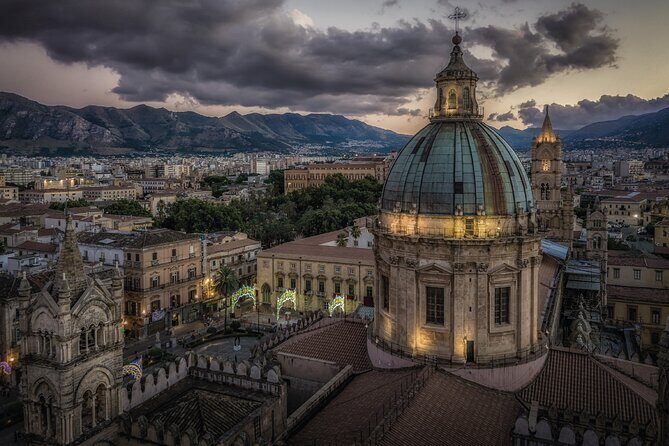
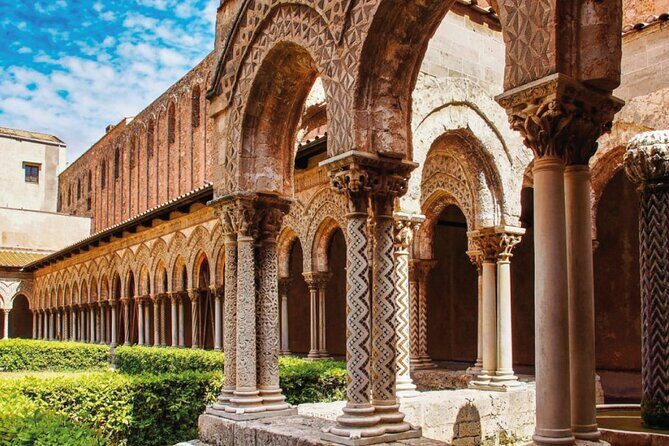
Your walk begins at the Church of Saint John of the Hermits (Via dei Benedettini, 16). It’s a strong opening choice because the site sets up Palermo’s big theme: the city as a meeting point of religions and rulers.
This church is part of the UNESCO route Arab-Norman Palermo and the Cathedrals of Cefalù and Monreale, and it sits on a place with a long religious storyline. The location first held a monastery devoted to Saint Hermes, then—during Muslim rule—became a mosque. Later, the Benedictines took over, and the abbot even served as the king’s confessor. That mix of layers is exactly what makes Palermo fun to visit: you’re not just seeing buildings, you’re seeing time stacked on time.
Practical note: admission for this stop is not included (7€). Even if you’re skipping one paid interior, the outside area still helps you understand the vibe of the route.
You can also read our reviews of more walking tours in Palermo
Palazzo dei Normanni: the oldest royal palace idea gets real
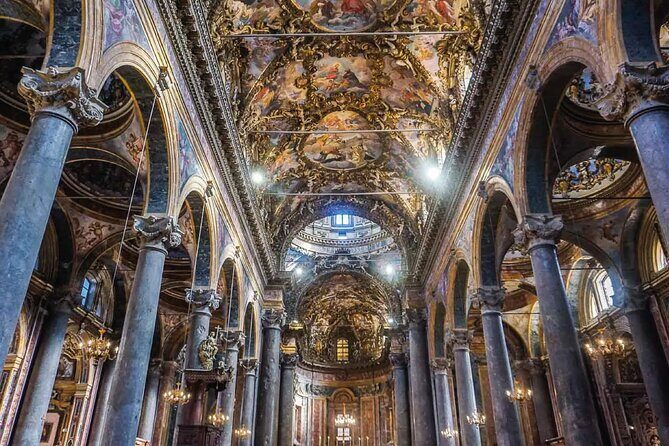
Next comes the Norman Palace (also called the Royal Palace, Palazzo dei Normanni). This is one of those places where the big claim—oldest royal palace in Europe—isn’t just marketing. The palace stands on older structures dating back to the Punic-Roman period, and there are even underground areas you can visit where you may see remains tied to the first Punic settlements.
The guide sets you up for this stop by giving you context before you walk into the history maze. And the time you’re given here is generous (about 2 hours), which matters because palace visits aren’t quick. If you rush, you’ll miss the point: Palermo’s power history is written in architecture and in what got built on top of what.
Admission is not included here (17€). If you’re watching your budget, think of this as the single best paid interior on the route—because it directly connects multiple eras, including the older Punic-Roman layer.
Palermo Cathedral: Byzantine, Islamic, Latin, and Santa Rosalia
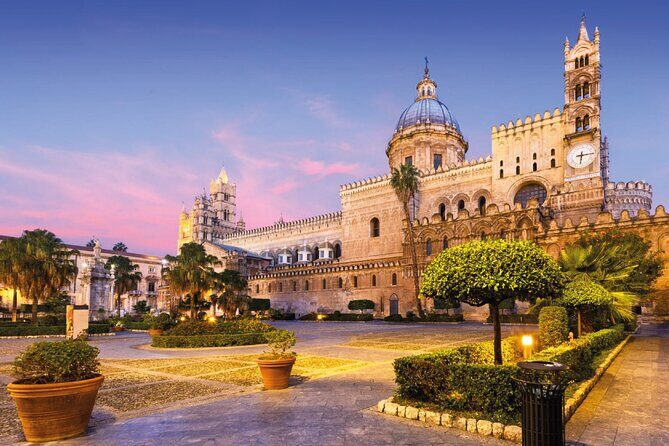
The walk then points you to Cattedrale di Palermo (Palermo Cathedral). This is a World Heritage Site and also a working place of worship, so it has a different energy than a museum-only stop.
What I like about this stop is the way it’s framed: Palermo Cathedral blends Byzantine, Islamic, and Latin elements. Then, inside, it connects to the city’s living identity. You can see the Diocesan Museum and also the Chapel with the relics of Santa Rosalia, Palermo’s patron saint. The cathedral also has the tombs of the Norman kings, which adds another layer of power and continuity.
Good news: this stop’s admission is listed as free (at least for the core visit). The guide also keeps the time short (around 25 minutes), which is usually enough if you’re not trying to cover every museum object.
Teatro Massimo and the city grid you feel in your legs
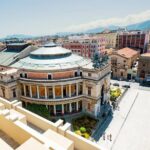
From sacred history you shift to spectacle: Teatro Massimo. This is the largest opera house in Italy and the third in Europe, and it sits right where older Palermo meets newer development. You get architecture you can feel from across the street.
The building is neoclassical and designed by Giovanni Battista Filippo Basile. The route gives you about 1 hour, which is a sensible amount for stopping for exterior views, reading the big-story points, and deciding whether you want to go inside.
Admission is not included (12€). If you love opera houses, this is worth paying for. If not, you can still use the guided audio to appreciate the design and the city planning around it, then keep walking.
Quattro Canti and Piazza Pretoria: architecture as a compass
Now you’re in the zone where walking becomes easier because the city’s structure starts showing itself.
Quattro Canti (also known as Piazza dei Quattro Canti) is the famous seventeenth-century intersection where Via Maqueda meets the Cassaro (Via Vittorio Emanuele). The key detail: this intersection helped divide Palermo into four districts called Mandamenti. When you know that, you can start orienting your sense of place fast.
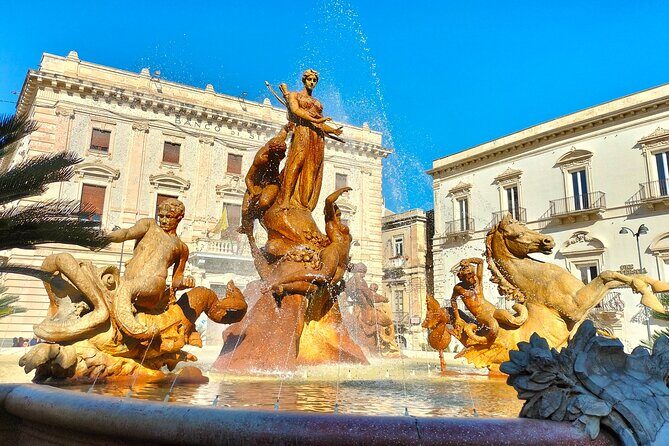
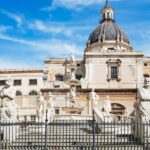
Then you reach Piazza Pretoria, a square famous for the fountain in the middle, a reason it’s nicknamed Piazza della Vergogna (Square of Shame). The audio helps you connect what you see to why the square became so well-known, and it’s a great place to pause for a breather. The time is short (about 15 minutes), so don’t treat it as a long stay—treat it as a palate cleanser between heavier stops.
You can also read our reviews of more guided tours in Palermo

La Vucciria market: classic Palermo street energy on your schedule
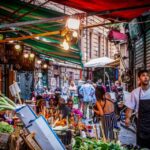
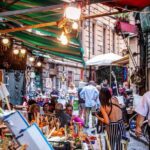
No Palermo walk feels complete without at least one market stop, and La Vucciria is a strong choice. It sits in the historic Loggia district between Via Roma, Piazza San Domenico, and Via Vittorio Emanuele. It also has a real history behind the noise.
The name is tied to the French word boucherie, meaning butcher’s shop—because meat was originally sold here. That kind of detail matters because it explains the market’s identity instead of treating it like a theme park.
The route gives about 25 minutes, which is just right for a look-and-wander stop. You can skim, take photos, and decide if you want a snack. This is the part of Palermo where your senses do the storytelling, and the audio gives you enough context to understand what you’re seeing without trapping you in a schedule.
La Kalsa: an old neighborhood with an oriental feel
Next is La Kalsa, one of Palermo’s oldest neighborhoods, dating back to the era of Islamic domination. The audio frames it as a place that still carries an oriental atmosphere, helped by Arab-Norman style monuments.
This section is listed as about 15 minutes, which makes sense because the value here is the feeling of getting a different street rhythm. You’ll want to use your instincts: slow down at corners, look at entrances and façade details, and don’t rush through just because the guide’s timebox says so.
Palazzo Abatellis and the Gothic-to-Renaissance blend
If you like architectural style shifts, Palazzo Abatellis is worth your attention. It’s a prestigious example of Gothic and Renaissance architecture, built in the 15th century for Francesco Abatellis, a Sicilian nobleman. The design is attributed to Matteo Carnilivari, and the building’s mix of Gothic structure with Renaissance influence is the point.
The stop is about 1 hour, and admission is not included. If you’re the kind of traveler who reads the stonework as you go, this is a great time investment. If you’re more “I want the highlights and the walk,” you might use it for exterior views plus the guided context, then decide quickly whether to pay.
Museo delle Maioliche Stanze al Genio: the majolica lovers’ reward
You end at Museo Delle Maioliche Stanze Al Genio (Via Giuseppe Garibaldi, 11). If you’re into decorative tiles, this is a fun finish because it’s specific.
The collection is spread across eight rooms and organized by era and geographical origin. The tiles are mainly from Campania and Sicily, made between the 15th and 19th centuries. The guide also notes that these tiles were used for floors in noble and bourgeois homes, which gives you a clearer sense of what majolica meant socially—not just artistically.
Admission is not included for this stop. Still, it’s a nice capstone because it pulls together the idea of Palermo as a layered culture center: food, art, power, religion—right down to what people walked on.
Price and what you may still pay for inside monuments
The guide costs $7.21 per person, and that’s the headline value. The route also includes a digital guide you can use in multiple languages (English plus Spanish, Italian, German, French), with audio + written text, and best local restaurant advice. The guide connects to Google Maps, which is the kind of support that saves time and energy.
Here’s the catch you should plan for: most major interiors aren’t included. From the information provided, you may pay for:
- Chiesa degli Eremiti: 7€
- Palazzo dei Normanni: 17€
- Teatro Massimo: 12€
So if you choose to enter all three paid sites, you’re looking at about 36€ in tickets, plus the low guide cost. Even with that, the overall value can still be strong if your goal is to cover the major landmarks without paying for a full guided group tour.
The “value math” here is simple: this is excellent for people who like to wander and control their own pace, and less ideal if you want one fixed human-led experience.
How the audio guide works (and the one common frustration)
You’ll need a smartphone with internet connection to use the digital guide. After booking, your voucher includes details to activate it, and you should read that carefully. One downside that can happen is access needing a website step with your audio credentials, so don’t wait until you’re staring at your first street sign to figure it out.
Once it’s running, you can hear the audio through your phone speakers or headphones. One benefit of this format is that you don’t have to stay locked in; you can pause to look at a doorway, rewind if something clicks late, and keep moving without asking anyone for clarification.
Duration is listed as about 6 to 7 hours. Because you’re self-guided, that time changes based on how long you stop for interiors, meals, and market browsing. If you move briskly and only enter the top paid sites, you can comfortably fit it into a big day.
Timing and pacing: a full day without feeling rushed
This route is built for a long walking block—so it works best when you plan one main Palermo activity, not a packed calendar of five things.
What helps is the way the stops are distributed:
- shorter moments at squares and neighborhood corners
- medium time for markets and cathedral context
- longer time where interiors actually need it (Palazzo dei Normanni, and optional paid sights)
Also, the guide gives you the structure to move efficiently while still letting you choose your pace. That’s the sweet spot for Palermo: you get an order to follow, but you don’t feel trapped.
Getting there and where you finish
The tour’s start point is the Church of Saint John of the Hermits at Via dei Benedettini, 16. Public transportation is listed as nearby, which matters for a city where you may not want to rely on taxis for every move.
The walk finishes at Rooms at the Museum of majolica Genius on Via Giuseppe Garibaldi, 11. The digital guide is also described as something you can use to decide your ending point, but the provided end location gives you a clean final destination to aim for.
Who should book this Palermo walking guide?
This one is a smart fit if:
- you want major highlights plus a few “real city” stops like La Vucciria
- you like learning at your own speed, with audio you can replay
- you’re trying to keep costs down compared to a fully guided group tour
- you’d enjoy a finish focused on majolica
You might want to choose something else if:
- you don’t want to rely on a smartphone and internet
- you’d rather have a person explain on the spot
- you hate the idea of paying extra for key interiors (since the guide itself doesn’t include those tickets)
Should you book this Palermo walking tour?
If your goal is a great first day in Palermo with a flexible structure, I think this booking makes sense. The guide is inexpensive, the audio format is easy to control, and the route hits the big historical anchors plus street-level Palermo.
Book it if you’re comfortable with a smartphone-based guide and you plan a budget for a few paid interiors. Skip it if you want zero tech, a fully included museum day, or an instructor-led group experience.