REVIEW · PALERMO
Palermo: Markets and Monuments City Center Walking Tour
Book on GetYourGuide →Operated by Cavallaro Fabrizio · Bookable on GetYourGuide
Palermo hits your senses fast. This walking tour is one of the easiest ways to see Palermo Cathedral and then turn right into the sensory chaos of the Capo street market. I love the way the route strings together major sights with practical context, so you’re not just looking at buildings, you’re understanding what you’re seeing. One thing to plan for: cathedral dress rules are real, so bring the right clothes or plan to buy a cover at the entrance.
I also like the guide factor. Cavallaro Fabrizio is known for explanations that feel detailed but not heavy, with room for questions and helpful pointers on what to do next. If you’re the type who wants your photos backed up by actual meaning, this format works.
The pace is walk-and-stop for about 2–3 hours, and that’s ideal for a first morning or afternoon in town. Just wear comfortable shoes, because you’ll be on foot for the city-center stretch and you’ll want your legs fresh for the markets and churches.
In This Review
- Key highlights you’ll remember
- Start in the right place: getting your bearings quickly
- Teatro Massimo: acoustics first, fancy architecture second
- Palermo Cathedral: what you get, and how the dress code won’t ruin your day
- Capo street market: the fastest way to feel Palermo’s daily life
- The Church of the Gesù and Baroque Palermo’s drama
- Cassaro and Quattro Canti: street geometry that shapes everything
- Palazzo Pretorio and Fontana Pretoria: the story behind the nickname
- Norman Sicily churches: Martorana and San Cataldo as must-not-miss anchors
- Where the tour ends: finishing in the heart of historic Palermo
- Price and value: what $41 buys you (and what you still handle yourself)
- Small things to plan: shoes, bags, and cathedral rules
- Should you book this Palermo markets and monuments tour?
- FAQ
- How long is the Palermo Markets and Monuments City Center Walking Tour?
- What is included in the tour price?
- Is there pickup if I’m arriving by cruise?
- What street food can I try during the Capo market stop?
- What’s the dress code for Palermo Cathedral?
- Can I buy something at the cathedral if I’m not dressed correctly?
- Are food and drinks included?
- What languages is the tour offered in?
- Is luggage allowed?
- Is there free cancellation?
Key highlights you’ll remember
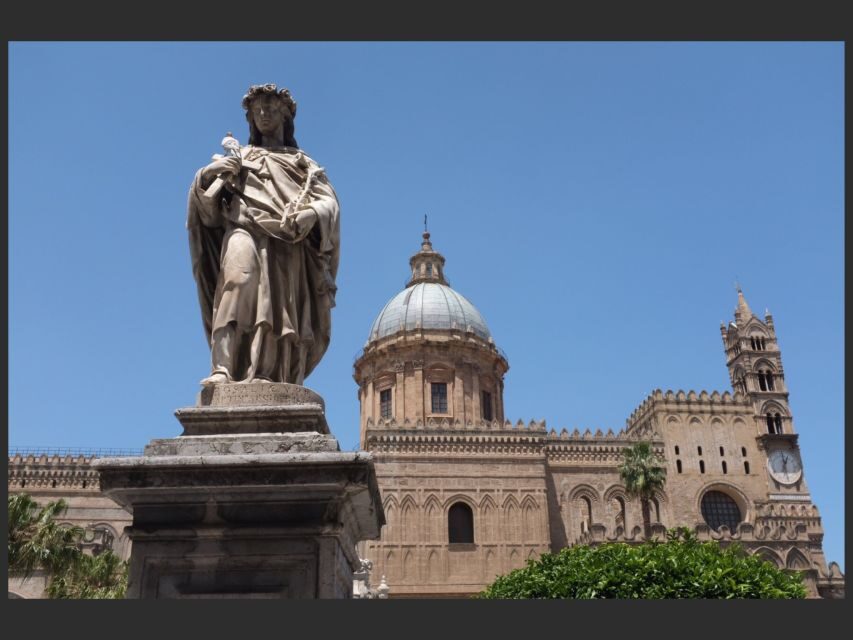
- Palermo Cathedral interior included: 12th-century UNESCO-listed Norman-era must-see
- Capo street market time: real street-level Palermo, with stalls, smells, and people-watching
- Teatro Massimo context: learn why Italy’s largest opera house is famous for its acoustics
- Fontana Pretoria and Praetorian Palace area: art history plus the story behind the square of shame nickname
- Norman Sicily church clusters: Martorana Church and San Cataldo as standout stops
- Quattro Canti (Four Corners) finish: the Baroque crossroads that anchors historic Palermo
Start in the right place: getting your bearings quickly
You’ll begin in central Palermo, with meeting points that can vary depending on what you booked. One common start is at Feltrinelli Librerie on Via Orologio, 11. If you’re arriving by cruise ship, there’s also an optional pickup close to the port, which is a smart way to reduce stress on a tight schedule.
From the start, you’re set up to see the city without having to plan every turn yourself. The walk connects major landmarks in a way that helps you understand how Palermo’s center is arranged, especially around the big squares and church clusters.
This tour also works well if you want a compact overview before choosing where to go deeper later. In about 2–3 hours, you get the main monuments that shape the look and feel of the historic core.
You can also read our reviews of more walking tours in Palermo
Teatro Massimo: acoustics first, fancy architecture second
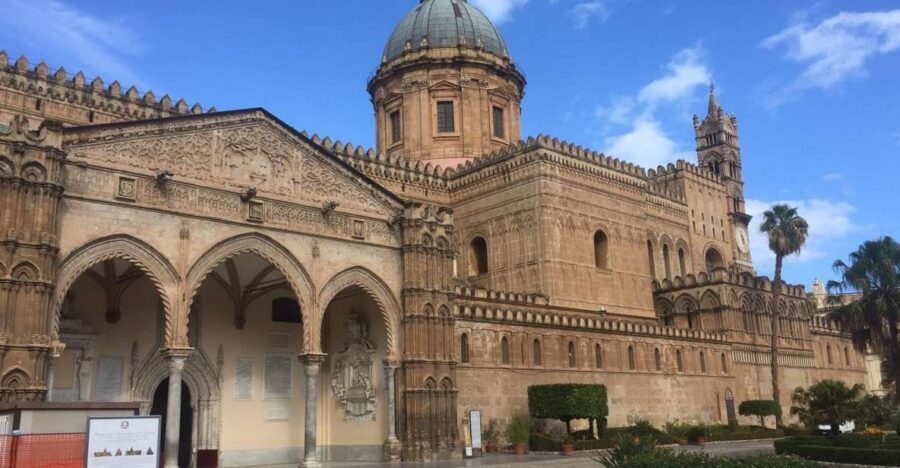
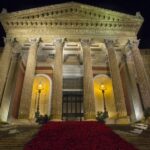
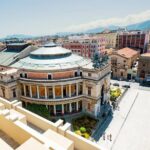
Early on, you’ll head to Teatro Massimo, Italy’s largest opera house. The payoff isn’t just that it’s impressive from the outside—it’s that your guide gives you context about why it’s famous, especially its perfect acoustics.
Opera houses can feel like museum stops unless someone puts them in context. Here, the stop is brief but meaningful: you learn how the building earned its reputation, and then you keep walking instead of getting stuck.
You’ll also pass by the Porta Carini area on the route. Think of this as a quick glimpse of the street fabric that connects the city’s older structures to what you see today.
Palermo Cathedral: what you get, and how the dress code won’t ruin your day
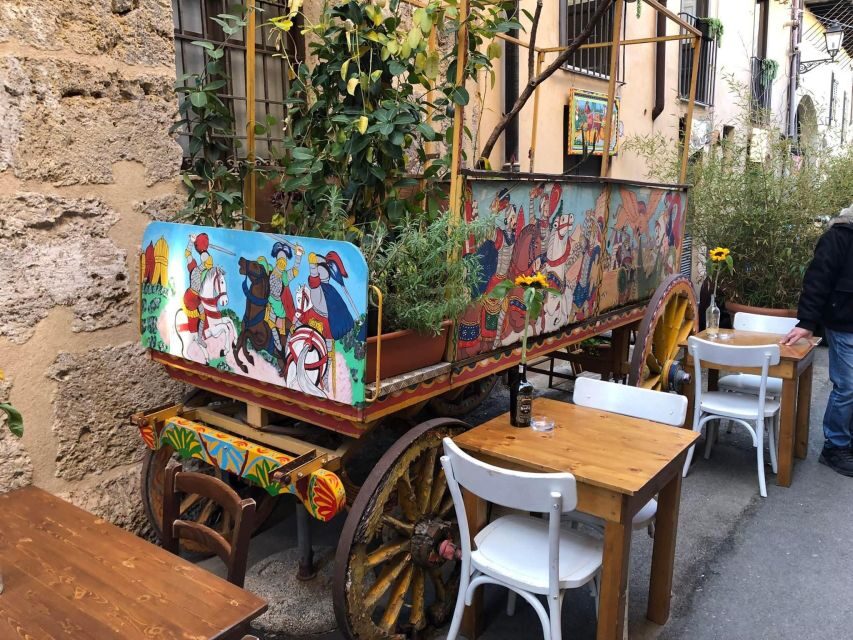
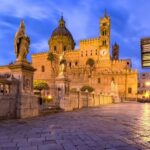
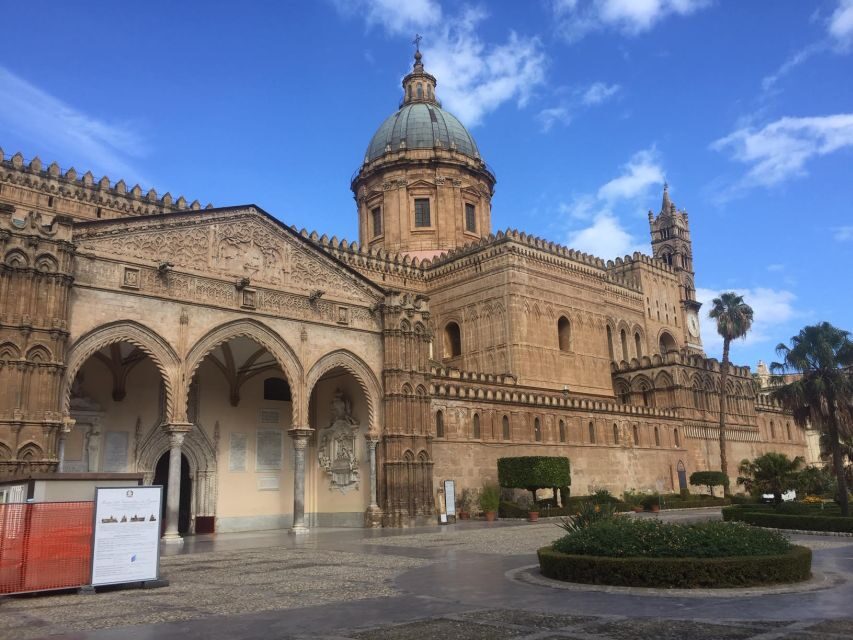
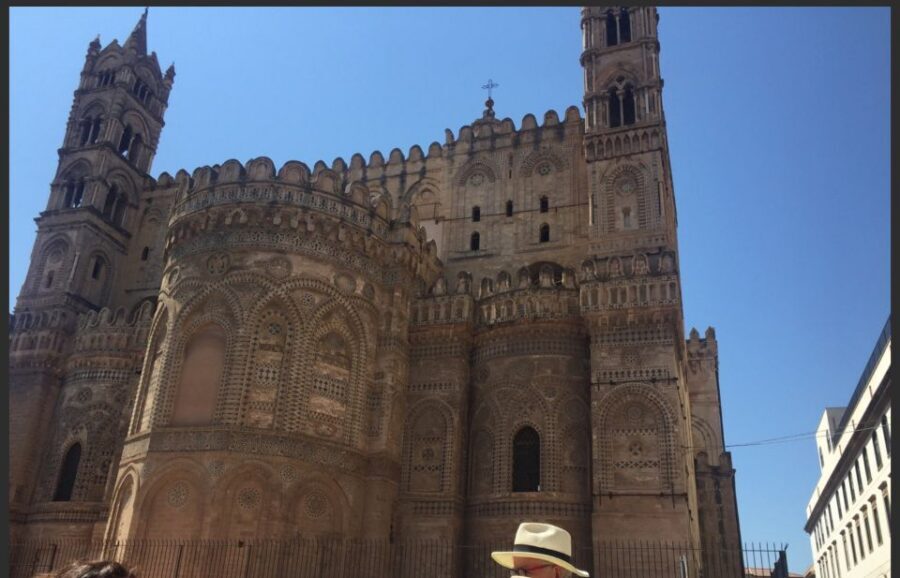
Palermo Cathedral is the big anchor of the morning. You’ll visit inside a 12th-century cathedral that’s part of UNESCO’s World Heritage list, and that means your time there isn’t just sightseeing—it’s history you can stand inside.
The cathedral visit includes the entrance, which is a real value, because it’s one of the most likely “paid ticket” items on a walking tour. And because you’re going with a guide, you’ll be in the right places for what to notice.
Now the practical part: a dress code is required. Men cannot wear shorts or tank tops. Women cannot wear shorts, miniskirts, or tops. The good news is that bermudas and t-shirts are allowed, so you don’t have to pack fancy clothes.
If you forget, you can buy a light jacket at the cathedral entrance for about 1€ to cover shoulders and legs. That small option can save your afternoon—so don’t assume you’re out of luck if you’re dressed more casually than the rules.
Capo street market: the fastest way to feel Palermo’s daily life
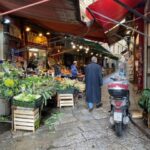
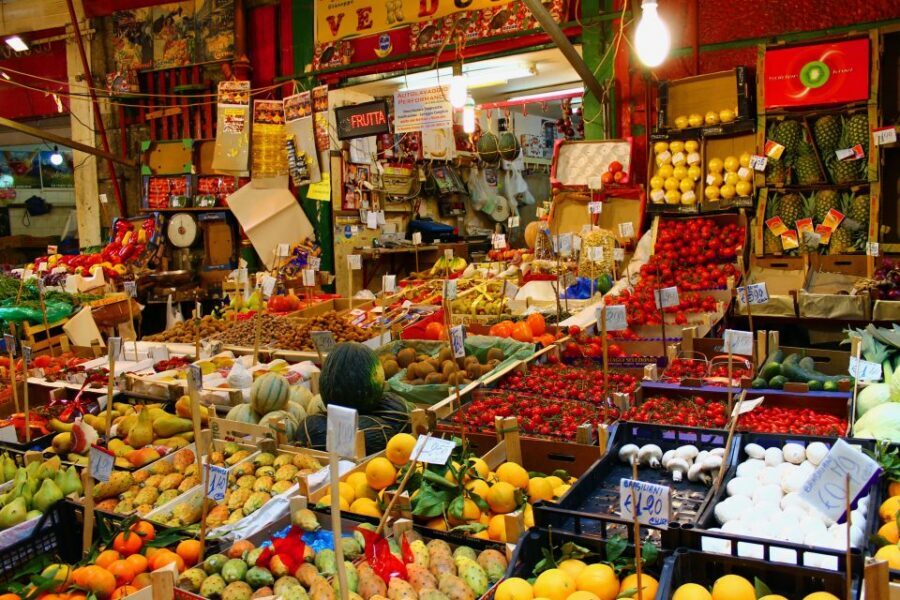
Then the tour shifts from monumental buildings to street life. You’ll walk into the famous Capo street market area, and this is where Palermo feels most like Palermo.
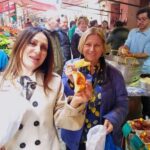
Your guide leads you through the stalls, so you’re not just wandering and hoping you understand what you’re looking at. You get to observe the scene—textiles, colorful foods, and that constant motion that makes markets feel like a living thing.
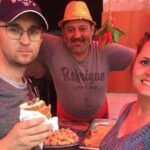
The star for many people is the chance to try street food. You can buy and taste classics like panelle, crocché, sfincione, and arancina. The key detail: food and drinks are not included in the tour price, so think of this as optional tasting built into the market stop.
If you want to maximize your experience, bring small bills and aim to try one or two items. Markets move fast, and after a couple of bites you’ll start noticing the differences between textures and flavors—especially between fried snacks and the baked, saucy types.
The Church of the Gesù and Baroque Palermo’s drama
Next you’ll visit Church of the Gesù, one of Palermo’s most important Baroque churches. Even if you’re not a self-declared architecture nerd, Baroque churches tend to “read” quickly: dramatic shapes, strong visual impact, and details meant to pull your eye around.
The guide’s job here is to point out what matters so you’re not just looking at ornament. You’ll come away with a better sense of why this style took hold in Palermo and how it contrasts with the older Norman-era influence you’ll see later.
This stop also helps balance the tour. One moment you’re in the press of the market; the next, you’re in a structured space designed to make you slow down and look.
You can also read our reviews of more city tours in Palermo


Cassaro and Quattro Canti: street geometry that shapes everything
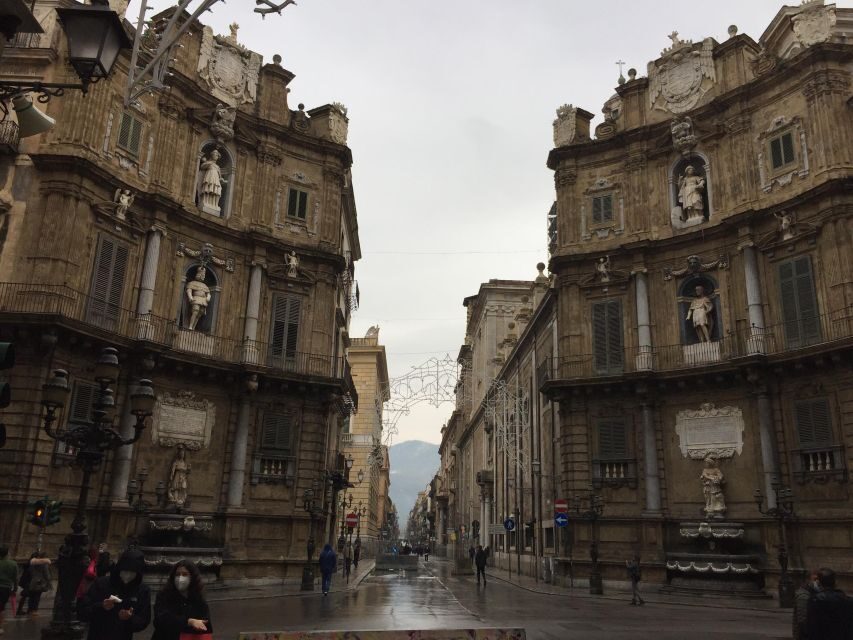
As you move through central Palermo, you’ll pass along Cassaro, a main street that helps connect the big sights. It’s a useful transition point: you feel the scale of the city and how distances are stitched together.
Then you arrive at Quattro Canti, also known as Four Corners, and it’s a highlight for many people. This Baroque square sits at the crossing of Corso Vittorio Emanuele and Via Maqueda and was built in the early 1600s. In plain terms: it’s the place where Palermo’s major streets “announce themselves.”
You’ll have time for a guided visit here, so it doesn’t feel like a quick photo stop. It’s a spot that helps you understand the city layout at a glance, and after seeing it, it’s easier to navigate on your own.
Palazzo Pretorio and Fontana Pretoria: the story behind the nickname
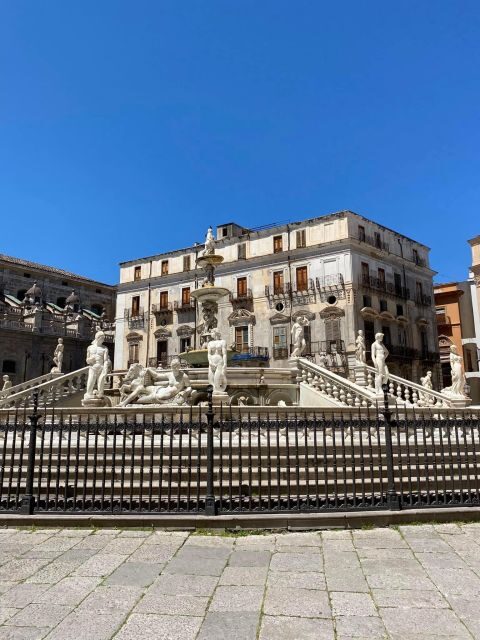
One of the most memorable areas on the walk is the Praetorian Palace zone. You’ll visit Palazzo Pretorio, described as an outstanding 15th-century palace, and it gives you a sense of how powerful Palermo’s civic leadership was.
From there, you’ll reach Pretoria Square, which locals call the square of shame because of the nudity in the fountain statues. This is one of those details that’s easy to miss if you don’t get the context—so the guide’s explanation matters.
Fontana Pretoria is visually striking, and the humor (however you read it) is part of the appeal. You’re not just learning what you see; you’re learning why it became a local talking point.
If you like history that comes with real human stories, this section delivers. If you prefer quiet, contemplative monuments only, you might find this area a bit lively, but it’s still worth the time.
Norman Sicily churches: Martorana and San Cataldo as must-not-miss anchors
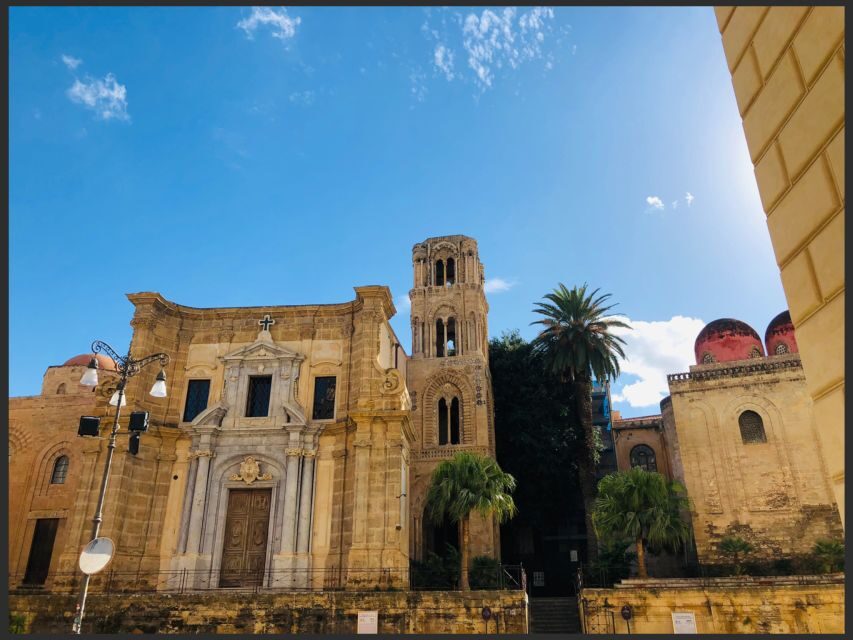
Later in the tour, you’ll visit Martorana Church and the Church of San Cataldo. These are both Norman Sicily–era churches and both are tied to UNESCO World Heritage recognition, which is useful because it signals you’re seeing something that matters beyond local reputation.
These stops are a nice change from the Baroque drama you saw earlier. Norman-era architecture can feel more grounded and structured, so it’s easier to compare styles as you walk. And because you’re guided, you’ll know what to look for instead of guessing.
You’ll also visit Chiesa di Santa Caterina and see other significant parts of the historic center along the way. The route isn’t random—it’s designed so the older layers of Palermo’s identity show up in the right order.
Where the tour ends: finishing in the heart of historic Palermo
The tour ends in the historic center, at Via Maqueda, 172. Finishing here is convenient because Via Maqueda is a major spine of the city, so you can keep going right away—whether that means grabbing a late bite, heading toward another church, or simply wandering with better direction than when you arrived.
By the time you reach the end point, you’ve seen the major anchors: the cathedral, the market, the big civic square area, and the Norman church stops. It’s a complete center-window into Palermo.
Price and value: what $41 buys you (and what you still handle yourself)
At about $41 per person for a 2–3 hour guided walk, this price feels fair for what you get—especially because the entrance to Palermo Cathedral is included. Many short tours include only guiding time and then make you pay separately for the top sight. Here, you get one of the main ticket items wrapped into the deal.
You do need to plan for what’s not included: entrance fees to other monuments and museums (besides the cathedral) and food and drinks. The market stop gives you the option to taste Palermo classics, but you’ll pay for whatever you choose.
For me, the value sweet spot is this: if you’re short on time but you want major monuments plus street-market culture in one go, a guided route at this length saves you from piecing it together yourself.
This tour tends to suit:
- First-timers who want structure in the historic core
- Travelers who like learning while walking (not standing still for hours)
- People who want market flavor plus major churches without building an itinerary
Small things to plan: shoes, bags, and cathedral rules
A few practical notes can make the difference between a smooth tour and a stressful one.
- Wear comfortable shoes. You’ll be walking from stop to stop in central Palermo.
- No luggage or large bags. Keep your load small so you can move easily through streets and inside churches.
- Pack basics like water and consider bringing snacks, especially since food isn’t included.
- Dress for the cathedral. If your outfit is borderline, that small 1€ jacket at the entrance can rescue you.
Also, remember this is a guided walking tour. The experience is best when you keep moving and let the guide set the pace.
Should you book this Palermo markets and monuments tour?
Book it if you want the best “first pass” at Palermo’s center: cathedral interior, Capo market street-level life, and key Baroque and Norman church stops, all in a compact 2–3 hour window.
Skip—or at least consider alternatives—if you hate dress-code rules or you’d rather spend your time entirely on one neighborhood without moving on. Also, if you’re trying to do a food-only mission, note that tastings are optional and not included, even though the market is where the tour gets delicious.
If you’re the type who wants meaning behind the photos, you’ll likely love this route. With a guide like Cavallaro Fabrizio, it’s built to be informative without turning into lectures—so you get to keep enjoying Palermo while you learn.
FAQ
How long is the Palermo Markets and Monuments City Center Walking Tour?
It’s listed as 2–3 hours, depending on the starting time available.
What is included in the tour price?
You get a professional guide, entrance to Palermo Cathedral, and an option close to the port for cruise passengers.
Is there pickup if I’m arriving by cruise?
Yes. There is an optional pickup option close to the port for cruise passengers.
What street food can I try during the Capo market stop?
You can buy and taste items like panelle, crocché, sfincione, and arancina at the market area.
What’s the dress code for Palermo Cathedral?
Men cannot wear shorts or tank tops. Women cannot wear shorts, miniskirts, or tops. Bermuda shorts and t-shirts are allowed.
Can I buy something at the cathedral if I’m not dressed correctly?
Yes. At the entrance of the cathedral you can buy a light jacket for about 1€ to cover shoulders and legs.
Are food and drinks included?
No. Food and drinks are not included, though you may buy and taste street food during the market portion.
What languages is the tour offered in?
The live tour guide is available in Italian and English.
Is luggage allowed?
No. Luggage or large bags are not allowed.
Is there free cancellation?
Yes. Free cancellation is available up to 24 hours in advance for a full refund.