REVIEW · PALERMO
Palatine Chapel: Private Walking Tour & Sicilian Lunch
Book on GetYourGuide →Operated by Siciliandays · Bookable on GetYourGuide
One walk and you understand Palermo fast. This private half-day pairs Arabic-influenced street life with big-name sights like Theater Massimo and the Palatine Chapel. I love how the route connects neighborhoods, not just monuments, and I love that the lunch is a real Sicilian spread in a historic building; the one thing to consider is you’ll be walking on uneven old streets, and wheelchair access isn’t part of this plan.
You’ll start at the Teatro Massimo area, then wind through classic commercial streets, nightlife pockets, and the Cathedral zone before ending back at the meeting point. The guide keeps things clear and practical, so the stories behind the mosaics and domes make sense, not just sound impressive on paper.
If you’re short on time in Palermo and want your day to feel “complete” without turning it into a sprint, this is a strong way to do it. Just bring clothing that covers up at religious sites, since that’s expected in Palermo’s churches and chapels.
In This Review
- Key highlights to watch for
- Palermo on foot: why this 4-hour route makes sense
- Starting at Piazza Verdi and Teatro Massimo: the day’s anchor point
- Ruggero VII, St. Lucia, and the city’s Arabic layers
- Via Maqueda, Candelai, and Quattro Canti: the city’s main arteries
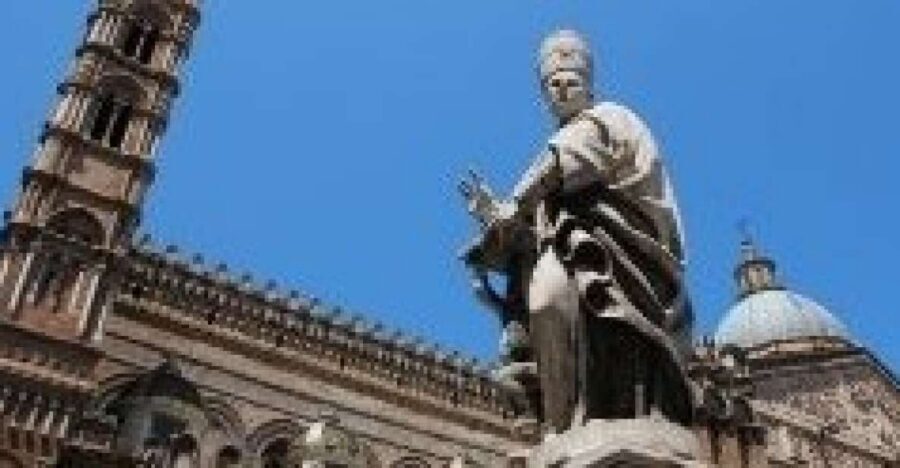
- Cathedral zone highlights: St. Joseph of Theatine and the Cathedral of Palermo
- Martorana domes and the Square of Shame: learning to look at the details
- The Royal Palace and Palatine Chapel: Arab-Norman art in one place
- Vucciria market and Saint Dominic Square: shopping without aimlessness
- Lunch in a 16th-century Spanish building: Sicilian classics in a real buffet
- Price and what you get for $192.58 per person
- Who this tour suits best (and who should reconsider)
- Practical notes before you go: dress, tickets, and religious-site rules
- Should you book this Palermo private walk with Sicilian lunch?
- FAQ
- FAQ
- How long is the Palatine Chapel private walking tour and Sicilian lunch?
- Where does the tour start?
- Does the price include lunch?
- What is included in the tour besides lunch?
- Are tickets for the Palatine Chapel included?
- Is entry to Teatro Massimo included?
- What language options does the live guide offer?
- Is the tour suitable for wheelchair users?
- What should I wear when visiting religious sites?
- What is the cancellation policy?
Key highlights to watch for
- Arabic neighborhoods on narrow lanes where Palermo’s subculture shows up in street life and architecture
- The Vucciria market and Saint Dominic Square so you can shop while the city is still waking up
- Palatine Chapel inside the Royal Palace with Arab-Norman art at its most concentrated
- Teatro Massimo as a tour stop (entry isn’t included, but you still get the context)
- Quattro Canti and the Square of Shame for the quick visual shocks Palermo does so well
- A 16th-century Spanish building lunch with a Sicilian buffet plus wine and dessert
Palermo on foot: why this 4-hour route makes sense
Palermo is built for wandering. You’ll feel it right away when you move off the main avenues into the tighter lanes and side streets, where the city’s old layers rub against each other. That matters here because the tour isn’t just a list of sites. It’s a walk that uses the city’s layout to explain how different cultures shaped the center.
You get a well-paced, half-day format. In about four hours, you cover several of Palermo’s headline sights and still have time to shop and eat without racing. Since it’s a private group, you’re not stuck listening to a crowded scramble. You can ask questions, slow down at the parts you like, and actually absorb what you’re seeing.
The only real drawback is the walking surface. This kind of route usually means uneven sidewalks and narrow streets, and this one isn’t suitable for wheelchair users. If you have mobility issues, plan for extra support or look for another option.
You can also read our reviews of more walking tours in Palermo
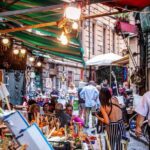
Starting at Piazza Verdi and Teatro Massimo: the day’s anchor point
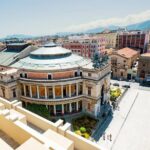
The tour begins at Piazza Verdi, by the steps of the Theater (Teatro Massimo area). That’s a smart start because it puts you near the city’s most important performing landmark before you scatter into smaller streets and side districts.
From here, you cross Politeama Square, where Palermo’s main city avenues meet. It’s a good “reset moment.” You get orientated in one open space, then the city pulls you into its denser fabric.
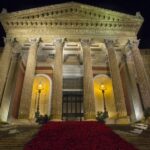
The route also sends you along Ruggero VII Street, which locals describe as the lounge of Palermo. You’ll pass the Church of St. Lucia on the way, which helps you see how religious buildings blend into everyday streets. Then the tour brings you to Teatro Massimo, noted as the largest theater in Europe.
Quick note on Teatro Massimo: entry isn’t included. Still, seeing it as a guided stop works because you’re learning what to look for before you ever decide whether you want to go inside later on your own.
Ruggero VII, St. Lucia, and the city’s Arabic layers
One of the biggest reasons to do Palermo with a guide is that the city’s influences show up in small, easy-to-miss cues. The tour is designed around that idea. As you move through the central neighborhoods, you’ll see older Arab quarters “hidden” among the lanes of the inner city.
You’ll get pointed at key areas, including the community of St. Clare. That sort of stop helps you understand Palermo isn’t one style layered on top of another. It’s more like overlapping communities, each leaving behind signs in street patterns, religious architecture, and decorative forms.
Even when the street looks ordinary, you’ll be told what to notice: street scale, where a church sits, how domes and facades reflect different influences. That turns Palermo from a photo spot into a place you can read.
Via Maqueda, Candelai, and Quattro Canti: the city’s main arteries
After the initial scatter, the walk leans into Via Maqueda, an ancient commercial street lined with churches and historic buildings. This section is where you’ll feel the city’s long commercial pulse. It’s also a practical way to move between zones without losing time.
Along the route you’ll reach Candelai, described as at the heart of Palermo’s nightlife. Even if you’re there in daylight, this stop is useful because it explains why certain streets feel livelier even when they look calmer. You’ll understand the city rhythm before night crowds ever matter.
Then comes one of Palermo’s most iconic visual junctions: Quattro Canti, literally four corners, dividing the city exactly into four parts. This isn’t just a photo stop. It’s a lesson in how Palermo planned its center, and why people still use these reference points in daily life.
Cathedral zone highlights: St. Joseph of Theatine and the Cathedral of Palermo
From Quattro Canti, the tour continues toward the major religious zone.
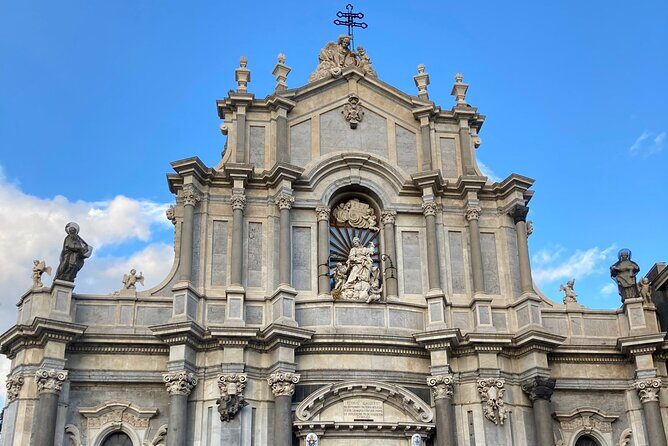
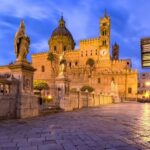
You’ll see St. Joseph of Theatine and then tour the Cathedral of Palermo area. This part matters because Palermo’s identity isn’t only in Arab-quarter streets. It’s also in the way Christian religious power took shape in the same geography.
The guide’s job here is to connect details you might overlook. For example, you may notice the mix of styles across facades and how decorations communicate eras and authority. That’s the kind of explanation that makes the Cathedral feel like part of the city story, not just a separate stop.
Also, religious sites require respect in real time. Plan to cover up appropriately, since the tour notes that you should wear clothing that covers your body when visiting churches.
You can also read our reviews of more private tours in Palermo

Martorana domes and the Square of Shame: learning to look at the details
Two striking stops help Palermo’s “mix” become obvious.
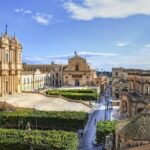
First, you’ll admire the red Arabic-style domes on top of the Church of the Martorana. Even if you’re not an architecture expert, you’ll recognize this as a visual clue: something old and Middle Eastern in feel, sitting right in the Christian religious landscape.
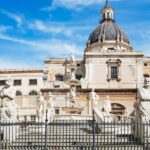
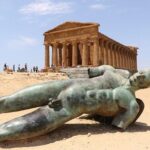
Next is the Square of Shame, where you’ll see nude statues. It’s not a stop you’ll forget, and it’s a useful reminder that Palermo’s center holds humor, shock, and symbolism all at once. The guide helps you understand what you’re looking at so it doesn’t feel random.
These moments are worth your attention because they change how you interpret the next major stop: the Palatine Chapel.
The Royal Palace and Palatine Chapel: Arab-Norman art in one place
After walking through the inner-city neighborhoods and the cathedral zone, you move into the Royal Palace area. This is where the tour’s main “why” shows up.
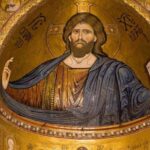
You’ll visit the Palatine Chapel, described as the jewel of Arab and Norman art inside the Royal Palace. This is the point where a lot of Palermo’s earlier architectural clues start connecting.
Here’s what makes this stop valuable: the chapel isn’t just famous. It’s a concentrated way to see cultural blending without needing multiple days of research. The guide’s explanations help you see why Arab and Norman influence can sit together in the same sacred space.
Palatine Chapel entry logistics: the entry ticket and audio guide are not included, but the tour includes skip-the-ticket-line support. That’s a practical win. It reduces time spent waiting, so you still have a comfortable pace for the rest of the walk.
This is also an important religious-site moment. Come prepared to dress appropriately for church entry.
Vucciria market and Saint Dominic Square: shopping without aimlessness
Before lunch, the tour stops for time around Vucciria and Saint Dominic Square. This is the part many travelers enjoy most, because it’s where Palermo feels like a living city rather than a museum.
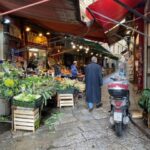
Vucciria is a historic market area, and shopping there doesn’t have to be complicated. Even if you’re not buying much, you’ll learn what’s sold, how vendors operate, and what locals actually treat as everyday goods.
What I like about this style of market stop is that you’re not shoved through. You get guidance on where you are in the city and what to look for, so shopping feels intentional instead of chaotic.
If you want a small edible souvenir, this is a sensible time to think about it. Just keep in mind that you’ll be eating lunch shortly, so plan purchases that won’t spoil your appetite.
Lunch in a 16th-century Spanish building: Sicilian classics in a real buffet
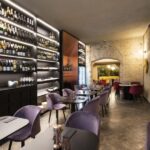
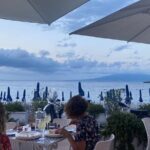
Then comes the reward: lunch. You’ll eat inside a 16th-century Spanish building, and that setting is part of the value. It keeps the day from feeling like you only consume sights. You also consume place.
The lunch is a traditional Sicilian buffet. Expect classics such as:
- panelle
- sfincione
- anelletti al forno
- caponata
- cassatelle
You’ll also have traditional Sicilian wine and a dessert of almond biscuits and mocha espresso.
This is a strong practical setup for a walking day. You get multiple hot and cold options without needing to choose a single dish and commit. A buffet makes sense in a city where food is a highlight, not an afterthought.
From the way this lunch is described, it also sounds like the stop is welcoming and easy to enjoy. After churches and theaters, that warmth matters.
Price and what you get for $192.58 per person
At $192.58 per person, this isn’t the cheapest way to see Palermo. But it’s also not overpriced for what’s included.
You’re paying for a guided private walking experience plus a full Sicilian lunch. The big sites included in the tour flow (like the Palatine Chapel visit) still have separate entry considerations: Palatine Chapel entry ticket and audio guide are not included, and entry to Teatro Massimo is not included. However, you do get skip-the-ticket-line support for the Palatine Chapel timing.
So where does the value land?
- You avoid wasting time figuring out the route on your own in a city that rewards a plan.
- You get a guide who can explain the cultural mix so the visuals mean something.
- You’re not choosing between “sights” or “food.” Lunch is part of the experience, not a side quest.
If you’re traveling with a friend or partner and want a structured half-day with food built in, the private format becomes more reasonable. If you’re solo and budget-first, you might compare against self-guided options. But for many people, paying more for fewer headaches is exactly the point.
Who this tour suits best (and who should reconsider)
This experience fits best if you:
- want Palermo context fast, not just checklists
- enjoy walking through neighborhoods and market areas
- care about understanding why places look the way they do, especially the Arab-Norman blend
- want lunch included so your afternoon doesn’t fall apart into separate plans
It’s less ideal if you:
- need wheelchair-friendly routing (this one isn’t suitable)
- dislike walking on uneven streets
- prefer to spend lots of time inside major buildings rather than seeing them as guided stops
Practical notes before you go: dress, tickets, and religious-site rules
You’ll visit churches and the Palatine Chapel, so plan for clothing that covers your body. That’s not a suggestion in most places. It’s part of being respectful and avoiding entry problems.
Also, two major entries aren’t included:
- Palatine Chapel ticket and audio guide
- Teatro Massimo entry
The good news is the tour helps reduce waiting by offering skip-the-ticket-line for the Palatine Chapel. Still, you should budget time for the standard security and check-in rhythms once you’re at the sites.
One last realism check: religious sites and the Theater can have extraordinary closures. The operator isn’t responsible for that, so keep your expectations flexible on your specific day.
Should you book this Palermo private walk with Sicilian lunch?
If you want Palermo to feel understandable by the end of the day, I’d book it. The route hits the city’s big signatures while still showing the street-level neighborhoods that make Palermo more interesting than a postcard. You get a strong mix of architecture, city planning landmarks like Quattro Canti, market time, and a real Sicilian meal.
Skip this only if you know you won’t enjoy walking on uneven streets, or if you want lots of unstructured time inside the big-ticket interiors. Otherwise, this is a smart use of a half-day.
FAQ
FAQ
How long is the Palatine Chapel private walking tour and Sicilian lunch?
The tour lasts 4 hours.
Where does the tour start?
It starts at Piazza Verdi, at the stairs of the Theatre.
Does the price include lunch?
Yes. Lunch is included as part of the experience.
What is included in the tour besides lunch?
You’ll get a guided walking tour.
Are tickets for the Palatine Chapel included?
No. Palatine Chapel entry ticket and audio guide are not included, though you can skip the ticket line.
Is entry to Teatro Massimo included?
No. Entry to Theater Massimo is not included.
What language options does the live guide offer?
The guide is available in Italian, English, French, Spanish, Russian, and German.
Is the tour suitable for wheelchair users?
No, it is not suitable for wheelchair users.
What should I wear when visiting religious sites?
Wear appropriate clothing that covers your body while visiting religious sites.
What is the cancellation policy?
You can cancel up to 24 hours in advance for a full refund.